


A clear guide to choosing an alto saxophone. The Yamaha YAS-280 is often recommended in France as a reliable, easy-to-play, well-built model. It is aimed mainly at students and dedicated players looking for a good instrument for learning.
This article helps beginners choose between a new, used, and refurbished instrument. It lists practical points to check before any purchase: mechanical condition, intonation, ease of producing a sound, and hidden costs.
We also cover common pitfalls: an instrument that has not been serviced, a limiting stock mouthpiece, and adjustment costs. You will find a comparison, a trial checklist, and advice on making the transaction safer.
Our aim: by the end, you will know whether this model meets your musical, budget, and practical needs. For opinions and firsthand accounts, see this useful thread: forum discussion and firsthand accounts.
Why the Yamaha YAS-280 is a benchmark student saxophone in France
Availability, consistency, simplicity: these words sum up why many teachers and conservatories recommend it.
Its reputation rests on measurable qualities: stable intonation, consistent keywork, and easy sound production. These qualities help students progress quickly.
Consistent production and quality checks make maintenance easier. The availability of parts and repair technicians in the French market also gives schools confidence.
Heritage and development: this model builds on a respected predecessor while improving practical details such as the neck clamp. It is a focused update, rather than a complete redesign.
- Consistent production runs
- Regular factory checks
- Repair technicians familiar with these saxophone models
Positioning: a premium student instrument. It costs more than an entry-level model, but its value for money lies in its longevity and the quality of its adjustments, rather than its lacquer alone. This reliability reduces costs over time.
Yamaha YAS-280: who is it for and what should you check before buying?
The right alto helps you progress while leaving room for musical expression.
Motivated beginners
Why choose an easy-to-play instrument: less effort spent producing a sound means more time to work on rhythm, ear training, and reading music.
A suitable alto reduces early frustration. It supports quick learning and noticeable progress in the first few weeks.
More advanced students
For developing students, stability and intonation are the priorities. A reliable instrument helps them work on tuning across the full range.
Before upgrading, it is better to strengthen your technique on a consistent alto.
Versatile musicians
Classical, jazz, rock, or soul: versatility calls for good projection, a quick response, and comfort. A versatile saxophone works well with different mouthpieces and embouchures.
When to consider a higher-range model
“Consider an intermediate or professional model if you want a distinctive tone, a very quick response, or more refined ergonomics for performances and competitions.”
- Need a more distinctive tone → consider an intermediate or professional model
- Demands of performances or competitions → ergonomics and sound projection
- A new mouthpiece helps, but does not completely change the instrument’s character
Build quality and reliability: what Yamaha does better than many entry-level models
A well-built instrument shows its worth when it withstands daily use without losing its adjustment.
Build quality extends beyond the lacquer: it includes the fit of components, alignment of the tone holes, precision of the pivots, and durability of the springs.
These details determine reliability: a saxophone that holds its adjustments can be played without frequent touch-ups. That reduces its total cost over time.
The neck and clamp: a small detail with a big effect
A secure clamp limits leaks and helps stabilize tuning. The redesigned clamp improves the connection between the neck and the body.
When the joint leaks, you can feel air escaping, notes become unstable, and the low register loses presence.
Why adjustments that hold matter so much
- Mechanical care: properly fitted pads and springs prevent parts from shifting.
- Durability: transport and changes in humidity should not throw the instrument out of adjustment.
- Practical rule: if the saxophone goes out of adjustment after little playing time, maintenance costs can cancel out the initial saving.
Ergonomics and playing comfort: an alto saxophone for everyday use
An alto’s ergonomics directly affect the quality of daily practice. A comfortable layout makes playing easier and reduces tension during practice sessions.
Simplified mechanisms: a layout suited to learning
Easy to play means fingerings feel natural and the keys respond without requiring force.
Simplified mechanisms reduce technical mistakes. They build confidence and help you play scales more consistently.
Right hand, transitions, and fatigue: what to notice during a trial
During a trial, check common transitions (B–C–C-sharp, F–F-sharp) and the stability of the low keys. Play slow scales, then fast passages, and finally hold some notes.
Notice how tired you feel after 20 to 30 minutes, both sitting and standing, while using a neck strap. Poor comfort slows progress and encourages bad habits.
| Criterion | What to test | Expected result |
|---|---|---|
| Fingerings | Scales and fast transitions | Keys are naturally within reach |
| Mechanical response | Fast passages | Keys respond without effort |
| Right-hand comfort | B–C–F transitions | No tension; smooth transitions |
Sound and intonation: what to expect from the YAS-280
The tone of a student alto should be judged by both its consistency and its expressive potential. This model offers a balanced, usable sound that suits students and players seeking a reliable foundation.
A warm, rich sound: strengths and limits
A warm, rich sound has clear harmonics, a rounded quality, and little harshness. On this alto, the tone remains gentle and versatile.
Expect clear sound quality, but not an extreme tonal character. The mouthpiece and reed have a strong influence on the range of tones available, often more than the instrument itself.
Accurate intonation: points to check
Test intonation by holding long notes with a metronome and tuner. Listen to octaves and fifths across the full range.
- Low-register stability: from low C to F.
- Upper-register tuning: high G, A, and B.
- Consistency: moving from the low register through the middle and into the high register.
Projection and tonal character
Projection depends on breath support, articulation, and especially the mouthpiece. Do not confuse volume with the ability of a sound to carry.
“It is mainly the saxophonist who shapes the sound.”
If the instrument plays in tune but lacks personality, changing the mouthpiece often has more effect than changing the saxophone.
Included accessories: case, mouthpiece, and essentials for getting started without extra costs
A complete set makes the first lesson easier. When the instrument arrives, you should be able to play it immediately, without hidden costs.
Carrying case
The case protects against impacts and temperature changes. It is essential for trips between home and lessons, as well as rehearsals.
Look for a rigid case, a secure interior fit, straps or a handle, and storage for reeds, a cleaning swab, and cork grease.
Stock mouthpiece and first impressions
The supplied mouthpiece generally lets you learn the basics. It may be enough at first but could become limiting as you improve.
If you want more projection or tonal color, replacing the mouthpiece is usually the most effective step.
Ligature, reeds, and a simple start
A functional brass ligature and a few spare reeds are enough to begin.
Practical advice: prioritize consistent reeds over an expensive accessory at the outset.
| Accessory | Expected result | How to check |
|---|---|---|
| Case | Rigidity, secure fit, storage | Test opening and closing; check the padding |
| Mouthpiece | Playable, with no cracks | Try a few long notes |
| Ligature and reeds | Compatible and consistent | Fit a reed and play |
In short, a good set offers real value for money and avoids immediate extra purchases. If the sound still feels limited, changing the mouthpiece may be the best next step.
The mouthpiece and embouchure: the main ways to improve sound quality
The mouthpiece remains the most effective way to change an alto’s tone. Your embouchure, mouthpiece, and reed often determine tone and response far more than the body of the instrument.
Why the mouthpiece affects the sound more than the instrument
The tip opening and shape of the mouthpiece change resistance, ease of sound production, brightness, and roundness. The same phrase played on two different mouthpieces will sound different, even on the same saxophone.
Choosing a versatile or jazz-oriented mouthpiece
For versatility, the Selmer C* remains a benchmark. For a more “jazzy” tone, the Meyer 7M is often recommended. The Vandoren V5 A35 is another well-regarded compromise.
Be careful: a jazz-oriented mouthpiece is not necessarily easier to play; depending on its opening and the reed used, it may require more control.
Tuning: mouthpiece position on the cork and embouchure control
To tune the instrument, move the mouthpiece slightly in or out on the cork and check the pitch with a tuner. Then keep it stable with a flexible, controlled embouchure.
“Many tuning problems come from poor mouthpiece placement or embouchure, rather than a fault in the saxophone.”
- Order of importance: embouchure → mouthpiece → reed → instrument.
- Try several combinations before deciding.
Price and value for money: what budget to expect in 2025
Comparing the total cost over 12 to 24 months gives a clearer picture of value for money.
Budget guidelines for 2025: expect to pay around €500 for a good used student instrument and close to €1,000 for a new model ready to play.

New: why this model costs more than an entry-level instrument
A new instrument comes with a warranty, factory inspection, and preparation. These services raise the initial price but help the instrument retain its value.
Used: opportunity or risk?
A properly serviced used instrument gives you access to a better saxophone on a smaller budget. Check its mechanical condition before completing the sale.
Hidden costs to allow for
Do not overlook servicing, pad replacement, leaks, neck cork, and springs. Include reeds and a cleaning swab, too.
Simple rule: budget 10 to 20% of the purchase price for maintenance in the first year. A cheaper instrument can cost more over 12 to 24 months if its adjustments do not hold.
Quick comparison: the Yamaha YAS-280 and other models on the market
This overview helps you choose based on reliability, comfort, tonal character, and budget.
Jupiter JAS500Q
Strengths: excellent intonation, comfortable right-hand ergonomics, and an adjustable thumb rest.
The springs have been improved, and the C-sharp/B-flat lever is convenient. The supplied mouthpiece is well made, making the instrument easier to get started with.
Woodbrass WSA100 and WSA300
WSA100: a complete set with leather pads, metal resonators, and a hard case included. Good value for beginners.
Watch for plastic thumb rests on some examples.
WSA300: this model is highlighted when a repair technician inspects and adjusts it before delivery. That reduces the risk of unpleasant surprises.
Selmer Axos
An instrument geared toward stage and concert use. It is known for its sound and benefits from dedicated adjustment workshops.
Its price is higher: consider it if you want a significant change in tone and a long-term investment.
“If reliability and easy resale are your priorities, this alto remains a very sensible choice; for a change in sound, consider the Jupiter or Axos according to your budget.”
| Model | Main advantage | What to check |
|---|---|---|
| JAS500Q (Jupiter) | Intonation and ergonomics | Thumb rest, C-sharp/B-flat lever |
| WSA100 (Woodbrass) | Complete set, leather pads | Thumb rests, quality control |
| WSA300 (Woodbrass) | Adjustment by a repair technician | Inspection before shipping |
| Axos (Selmer) | Tonal color and stage presence | Budget, concert use |
New, used, or refurbished: which is the safest buying option?
Choosing between new, used, and refurbished often means balancing risk against budget. Focus on actual reliability rather than the immediate saving.
New: warranty, preparation, and peace of mind
Advantage: a manufacturer’s warranty, an adjusted instrument, and after-sales support.
Factory preparation reduces the need for touch-ups. An established seller often offers a trial period and the option to exchange the instrument if needed.
Buying used from an individual: common risks and when to avoid it
Risks: leaks, worn pads, hidden impact damage, misaligned keywork, and no service history.
If you are a beginner without help, avoid buying an unserviced instrument from an individual. An inspection by a repair technician can make a used instrument a good option for a player supported by a teacher.
Refurbished: a balance of price, reassurance, and environmental benefits
Added value: a full inspection, replacement of necessary parts, and professional adjustments.
A refurbished instrument can offer an excellent balance of price and reliability while having a lower carbon footprint than a new one.
Choose a seller who can provide a service invoice and a warranty: it is a simple way to limit risk.
| Option | Advantage | When to choose it |
|---|---|---|
| New | Warranty, preparation, after-sales support | For beginners or anyone seeking peace of mind |
| Used | Lower price if the instrument has been serviced | For a player assisted by a repair technician |
| Refurbished | Professional service at a reduced price | For a tight budget when reassurance matters |
Before-you-buy checklist: what should you inspect on a saxophone, in a shop or at home?
Before completing a transaction, follow a simple checklist to spot common problems and assess the instrument’s overall quality.
Pad condition and airtightness
Inspect the pads: cracks, dents, or dark marks are signs of wear. Close each key and blow gently: if the low notes do not sound, there may be a leak.
Mechanism and keys
Check the keys for sideways movement. Springs should respond consistently and keys should move smoothly without clattering. Poor alignment often means an adjustment is needed.
Neck, cork, and clamp
Check that the mouthpiece sits straight without wobbling. The cork should be in good condition and the clamp should be firm without needing excessive force. A loose clamp causes leaks and intonation problems.
Intonation and sound production
Play a sequence: low C, middle G, high B. Listen to the tuning and assess how easily each note speaks. Notes that become shrill or hard to produce may signal a need for adjustment.
Service history
Ask for invoices and the dates of the latest services. Knowing how often the instrument was maintained and how it was stored helps you anticipate future costs.
- Practical tip: ask to try the instrument without rushing for 10 to 15 minutes, and take photos of the pads so you can seek an opinion later.
- For detailed advice, read our complete guide.
| Part | What to inspect | Satisfactory sign |
|---|---|---|
| Pads | Surface, seal | No cracks; keys close cleanly |
| Mechanism | Play, springs | Smooth movement without clattering |
| Neck | Cork, clamp | Stable mouthpiece, firm clamp |
Maintaining the YAS-280: habits that protect your investment
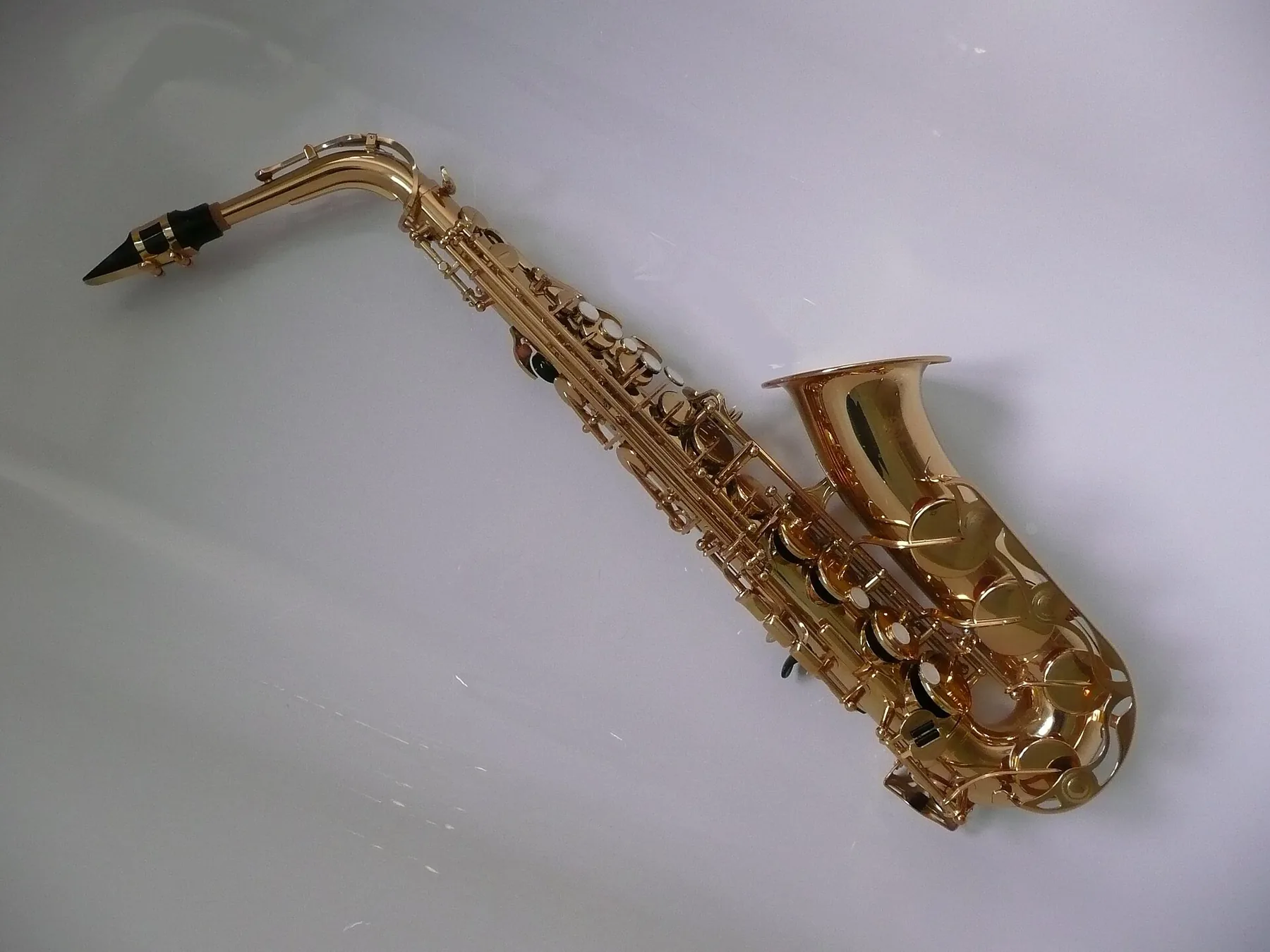
A few simple steps after each session preserve the mechanism and pads. They limit wear, stabilize intonation, and protect resale value. Regular care can therefore save you money.
Cleaning after every session
Run a cleaning swab through the instrument to remove moisture. Wipe the mouthpiece and key surfaces with a soft cloth.
Never press hard on the pads. Let the mouthpiece dry outside the case and replace the reed if it shows signs of wear.
Transport and storage
Always put the instrument in its case. Avoid extreme temperatures, and do not leave the saxophone in a car that is too hot or too cold.
Protect the neck from impacts and check that the mouthpiece is secure before each trip.
Periodic servicing by a repair technician
Recommended frequency: every 12 to 24 months for a student and every 6 to 12 months for conservatory or intensive use.
The technician checks alignment, spring tension, and leaks, then makes any necessary adjustments.
If low notes become difficult to play or some notes stop speaking reliably, first consider a leak or adjustment problem before changing reeds.
| Use | Suggested service interval | Purpose |
|---|---|---|
| Recreational | 24 months | Preserve quality |
| Student | 12 months | Maintain intonation and smooth mechanical operation |
| Intensive or conservatory use | 6 to 12 months | Prevent faults and leaks |
In short: even a reliable saxophone loses its qualities without maintenance. Solid construction helps, but daily care and professional adjustments protect both your instrument and your investment.
Where to buy in France: a shop, online retailer, or established seller?
Where you buy an instrument has a major effect on how well it holds up in practice. A reputable seller supplies an adjusted instrument, warranties, and after-sales support that often make a real difference.
Why choose a recognized retailer?
Preparation and quality control: an established shop or online retailer ships an instrument that is ready to play. This avoids immediate adjustment costs.
A returns policy, after-sales support, and a relationship with a repair technician offer additional reassurance when buying.
Trying instruments under realistic conditions: a simple comparison method
If possible, ask to try several instruments using the same mouthpiece and reed.
Run the same tests on each one: slow scales, long low notes, a fast passage, and a short piece. Compare intonation, response, and comfort.
- Established seller: legal business details, invoice, warranty, partner repair workshop, and consistent reviews.
- Reliable online retailer: trial period, careful packaging, traceable history, and an instrument adjusted before shipping.
- Physical shop: immediate trial, advice, and adjustments on site.
| Option | Advantage | What to check |
|---|---|---|
| Shop | On-site trial, immediate adjustment | Availability of models and repair workshops |
| Established online retailer | At-home trial period, traceability | Returns policy, instrument preparation |
| Private seller | Potentially lower price | Service invoices, actual pad condition |
To conclude: for a confident start on the saxophone, prioritize an adjusted instrument and a reliable seller over the lowest price. A good retailer protects your purchase and supports your progress.
Conclusion
In short, this instrument is a sensible choice for learning and regular playing.
Who it suits: motivated beginners, conservatory students, and amateur musicians will find a stable, versatile, and reliable saxophone here.
Before completing the purchase, check for leaks, how well the adjustments hold, the mechanism, and the neck clamp. Check the accessories and overall condition, too.
To choose well, buy from a reliable seller, use a checklist during your trial, then improve the sound with a suitable mouthpiece.
The higher price compared with an entry-level model is often justified over time. Keep this alto as a solid foundation and upgrade when your musical needs change.
If you are torn between several models, try them side by side briefly and record yourself. Further detailed reviews can help you explore your options.