

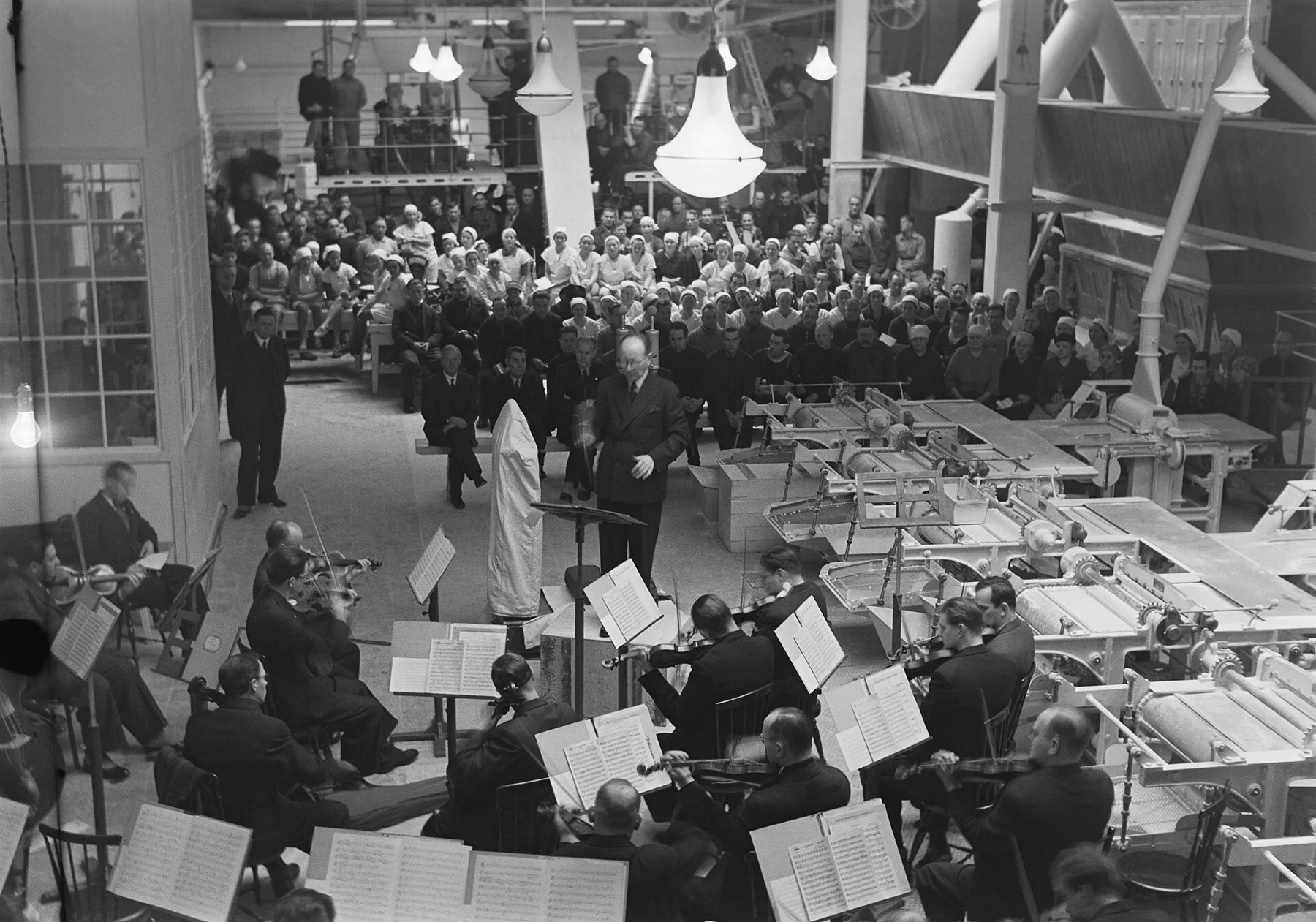
French classical music holds a central place in the history of music. With composers such as Claude Debussy and Maurice Ravel, it has made its mark on the world through its originality and depth. Their compositions continue to captivate listeners today.
France’s musical heritage is exceptionally rich. Iconic works such as Debussy’s “Clair de Lune” and Ravel’s “Boléro” remain essential points of reference. These composers influenced modern music and laid the foundations for contemporary composition.
The Paris Conservatoire, a symbol of musical excellence, has trained many talented performers. The piano, a central instrument in this tradition, has helped artists shine on the international stage. The legacy of these musicians inspires new generations.
Introduction
French classical music stands out for its rich history and cultural influence. It reflects a deep artistic heritage shaped by iconic figures and enduring works.
Since its beginnings, this musical tradition has evolved with the artistic movements of each era. Composers such as Claude Debussy and Maurice Ravel made history with works that still resonate today.
The Paris Conservatoire, a symbol of musical excellence, has played a central role in training many artists. The piano, an emblematic instrument, has helped musicians shine on the international stage.
French classical music is much more than an art form: it is an educational and cultural resource. It inspires new generations and opens up new ways of thinking and creating.
This article offers an overview of the composers and works that shaped this heritage. Masterpieces such as “Clair de Lune” and “Boléro” are at the heart of this exploration.
The historical context of French classical music
French classical music developed over centuries marked by major historical events. Each period left its mark, shaping a distinctive style.
Wars played a key role in musical development. During the French Revolution, for example, composers such as François-Joseph Gossec wrote patriotic works. These compositions reflect the spirit of a changing era.
The Paris Conservatoire, founded in 1795, became central to the training of musicians. It helped preserve and pass on musical traditions while encouraging innovation.
| Century | Characteristics | Examples |
|---|---|---|
| 17th–18th centuries | Emergence of opera and the symphony | Lully, Rameau |
| 19th century | Romanticism and expressiveness | Berlioz, Fauré |
| 20th century | Modernity and experimentation | Debussy, Ravel |
These composers left a lasting legacy: their works still resonate today. Their music bears witness to human resilience and creativity in the face of adversity.
French classical music: composers and masterpieces
French classical music shines through the diversity of its composers and the depth of their creations. Each brought a distinctive touch to a rich and varied musical legacy.
Leading composers such as Claude Debussy and Maurice Ravel made history with works that still resonate today. Their music, marked by originality and complexity, reflects the spirit of an ever-changing era.
The Paris Conservatoire, a symbol of musical excellence, played a key role in training many artists. The piano, a central instrument in this tradition, helped musicians shine on the international stage.
- Claude Debussy: “Clair de Lune” and “La Mer”
- Maurice Ravel: “Boléro” and “Daphnis et Chloé”
- Hector Berlioz: “Symphonie fantastique”
- Gabriel Fauré: “Requiem” and “Pavane”
These masterpieces embody tradition, style and innovation. They influenced modern music and laid the foundations for contemporary composition. Learn more about these composers and their contributions.
“Music is a science more exact than mathematics…”
Their relationships with institutions such as the Paris Conservatoire helped shape a lasting legacy. These works continue to inspire new generations, opening up new ways of thinking and creating.
The cultural and educational influence of classical music
French classical music makes an important cultural and educational contribution. It offers an ideal setting for exploring new artistic and educational dimensions.
Its effect on learning French
Listening closely to classical works can improve language comprehension. Complex rhythms and harmonies help develop musical listening skills, which can sharpen a learner’s perception of French intonation.
Composers such as Claude Debussy and Maurice Ravel created pieces that stimulate intellectual curiosity. Their works enrich vocabulary and encourage a deeper understanding of French culture.
Transcribing and singing these works can be particularly beneficial. These activities help learners master pronunciation and intonation, both essential to learning French effectively.
Classroom use and innovative methods
Teachers are increasingly bringing classical music into their lessons. This innovative approach stimulates creativity and strengthens learners’ memory.
| Method | Benefits | Example |
|---|---|---|
| Active listening | Improves listening comprehension | Analysis of Clair de Lune |
| Transcription | Refines pronunciation | Exercises using Boléro |
| Singing | Develops fluency | Performance of Pavane |
These methods show how powerful an educational resource classical music can be. It combines musical expression with learning French in an enriching, interactive approach.
Iconic composers of the 19th century
The 19th century marked a turning point for French music, as composers pushed artistic boundaries. Hector Berlioz and Gabriel Fauré each contributed to the musical development of the era in their own way.
Hector Berlioz and the symphonic revolution
Hector Berlioz, a central figure of Romanticism, transformed the symphony. His Symphonie fantastique remains a landmark thanks to its innovative use of instruments and musical storytelling. Berlioz introduced ideas such as the idée fixe, a recurring musical theme, and influenced generations of composers.
Gabriel Fauré and lyrical beauty
Gabriel Fauré, meanwhile, captivated audiences with his melodic sensitivity. His Requiem and Pavane combine gentleness and depth. Fauré modernized choral and instrumental music, leaving a lasting legacy.
The Impressionist and Symbolist era
Claude Debussy, a central figure of the Impressionist movement, revolutionized music by breaking with traditional conventions. His innovative approach to harmony and musical texture opened the way to a new era of creativity.
Claude Debussy: master of modernity
Debussy made his mark on music history through his bold use of scales and rhythms. He drew on many influences, including Javanese gamelan. His iconic work “Clair de Lune” illustrates his melodic genius and his ability to evoke poetic atmospheres.
He transformed music by treating it like a palette of colors, with each note enriching the overall texture. This approach influenced classical music and inspired jazz artists and modern composers.
A poetic and musical legacy
Debussy left a legacy deeply rooted in Symbolism. His work Pelléas et Mélisande reflects that movement through subtle shades of meaning that transcend words. He incorporated poetic elements and collaborated with writers such as Mallarmé and Verlaine.
“Music is a science more exact than mathematics…”
This fusion of music and poetry laid the foundations for a new artistic tradition, influencing generations of musicians and writers.
Debussy’s influence is still felt today: his harmonic and orchestral innovations continue to inspire. His work remains a landmark in the evolution of music, offering a distinctive perspective on modernity and artistic creativity.
Maurice Ravel’s harmonic and orchestral innovations
Maurice Ravel, one of the most influential composers of the 20th century, made history with his bold innovations. His approach to orchestration and rhythm reshaped the conventions of musical composition.
Analysis of Boléro
Boléro, composed in 1928, is an example of Ravel’s ingenuity. Characterized by its insistent rhythm and harmonic progression, the work showcases intricate orchestration. Its principal theme passes among different instruments, building tension that captivates the listener.
- Rigorous rhythmic structure
- Innovative use of instrumental colors
- Bold harmonic progression
Boléro remains a masterpiece that continues to inspire musicians and choreographers.
Daphnis et Chloé: a study of a masterpiece
Daphnis et Chloé, composed between 1909 and 1912, is a ballet that exemplifies orchestral excellence. This work, divided into two parts, combines captivating melodies with rich orchestration.
- Use of recurring melodic motifs
- Dense, expressive orchestration
- Complex narrative structure
The ballet Daphnis et Chloé demonstrates Ravel’s mastery of orchestration.
Maurice Ravel’s works continue to resonate throughout the world of classical music. His influence can be felt in composition as well as in piano performance and ballet. Discover how his creations transformed music.
Les Six and the École d’Arcueil
Les Six and the École d’Arcueil represent a significant movement in 20th-century music. Formed in 1923, Les Six comprised six composers influenced by Erik Satie. The group broke with traditional conventions and favored modernity and simplicity.
A rebellious spirit and a return to simplicity
The École d’Arcueil, formed in homage to Erik Satie, brought together composers such as Roger Desormière and Henri Sauguet. The group sought to renew musical aesthetics by moving away from complex structures.
Henri Sauguet, introduced to music at the age of five, became an organist at 15. His career culminated in honors that included being named an officer of the Legion of Honor in 1956.
| Group/School | Characteristics | Notable works |
|---|---|---|
| Les Six | Modernity, simplicity and a break with convention | Works by Honegger and Milhaud |
| École d’Arcueil | Satie’s influence and aesthetic renewal | Composers such as Sauguet |
These groups made their mark on French music history through their boldness and pursuit of renewal, influencing generations of musicians.
Their legacy remains alive today and continues to inspire. To learn more about these composers and their contributions, consult this resource.
Modern figures and the legacy of Jeune France
The 20th century saw the emergence of influential figures who reshaped classical music. The Jeune France group, formed in 1936, played a key role in promoting a modern, spiritual approach.
Olivier Messiaen: spirituality and innovation
Olivier Messiaen, one of the most influential composers of the 20th century, made his mark through a distinctive blend of spirituality and technical innovation. His Quartet for the End of Time remains a masterpiece, illustrating his ability to bring sacred themes into complex musical structures.
Messiaen was also an outstanding teacher who trained generations of musicians. His approach, combining technical rigor with spiritual expression, opened new paths for contemporary composers.
André Jolivet and stylistic diversity
André Jolivet, another major figure, brought remarkable stylistic diversity. His Suite liturgique reflects his interest in sacred music, while his piano compositions, such as Mana, show his constant exploration of new sounds.
Jolivet also championed film music and worked with renowned directors. His style, both lyrical and experimental, influenced many artists.
| Composer | Style | Notable works |
|---|---|---|
| Olivier Messiaen | Spirituality and innovation | Quartet for the End of Time |
| André Jolivet | Stylistic diversity | Suite liturgique, Mana |
These modern figures transformed musical conventions, opening the way to a new era of creativity. Their legacy continues to inspire contemporary musicians and offers a distinctive perspective on the evolution of classical music. Discover how their work influenced music.
Music education and learning French
Music education plays a key role in developing language and cultural skills. By including musical works in French lessons, learners can improve their listening comprehension and expression. This teaching approach stimulates creativity and strengthens memory.
Active listening and transcription methods
Active listening methods are essential to improving comprehension of French. By analyzing works such as Debussy’s Clair de Lune, learners develop their musical ear. This practice sharpens their perception of intonation and rhythm, which are also useful for mastering French pronunciation.
A transcription exercise involves writing down words or melodies heard. This can refine pronunciation and improve understanding of language structures. For example, transcribing passages from Ravel’s Boléro can help learners appreciate the nuances of French.
Singing, pronunciation and text analysis
Singing is a powerful way to improve pronunciation and intonation. Performing French melodies helps learners work on fluency. Singing Fauré’s Pavane, for example, can help them practice the softness and precision of French sounds.
Analyzing texts associated with classical works offers a broader perspective. Learners can explore the connections between music and literature and deepen their understanding of French culture.
A detailed analysis of an essential work
“Clair de Lune,” one of Claude Debussy’s best-known works, is a masterpiece that embodies the spirit of musical Impressionism. Composed in 1890, this piano piece forms part of the Suite bergamasque. Its title, inspired by a poem by Paul Verlaine, evokes a dreamy, poetic atmosphere.
Debussy used innovative harmonic techniques, including sustained pedal tones and modulating progressions, to create a rich, immersive musical texture. Although the piece has a free structure, it follows an internal logic, with melodic motifs that develop organically.
“Clair de Lune”: context and symbolism
“Clair de Lune” is more than a musical composition: it is a Symbolist work that evokes images and emotions. Its title, inspired by Verlaine’s poem, suggests an enchanting nocturnal atmosphere. Debussy’s music, with its complex harmonies and fluid rhythms, creates a sense of weightlessness, as though time had stopped.
Musical analysis techniques in practice
Musical analysis reveals how Debussy broke with traditional conventions. For example, he used triads that resolve in unexpected ways, creating a continual alternation of tension and release. His use of recurring but transformed melodic motifs also gives the composition depth.
These innovations reshaped the conventions of musical composition and opened the way to new experiments for 20th-century composers. Today, “Clair de Lune” remains an essential work for performers and listeners alike.
The impact of musical works on language learning
Listening to and analyzing classical musical works can offer valuable support when learning French. These activities stimulate listening comprehension and enrich vocabulary.
Vocal music has a particular role because melodies can help learners acquire new words. Singing French songs, for example, helps develop pronunciation and fluency.
Teaching methods combine listening, singing and transcription to strengthen language skills. Transcribing passages from Ravel’s Boléro or singing Fauré’s Pavane can help learners understand the nuances of French.
Studying musical texts enriches cultural understanding. Analyzing song lyrics in classical works, for example, offers a broader perspective on French culture.
Rhythm and intonation in music help learners remember words and expressions. These musical elements can make language information easier to retain.
Exploring French instrumental and vocal works
Exploring French instrumental and vocal works reveals extraordinary artistic richness. Diverse and profound, these creations offer a wide-ranging view of French music.
Chamber music and concertos
Chamber music holds a special place in the French repertoire. Its intimacy and subtlety highlight the dialogue between instruments. Claude Debussy’s Sonata for Violin and Piano, for example, combines harmonic complexity with melodic expressiveness.
Concertos, meanwhile, stand out for the balance between soloist and orchestra. Maurice Ravel’s Piano Concerto, with its captivating rhythm, remains an essential masterpiece. These works showcase the technical excellence and sensitivity of performers trained at the Paris Conservatoire.
Operas, ballets and vocal works
French operas and ballets demonstrate artistic boldness. Claude Debussy’s Pelléas et Mélisande, for example, stands out for its Symbolist approach and gentle melodies. Maurice Ravel’s Daphnis et Chloé, with its rich orchestral textures, is an iconic ballet that continues to captivate listeners.
Vocal works, meanwhile, bring words and music together in harmony. Gabriel Fauré’s Pavane, with its ethereal melody, embodies the elegance of French vocal music. These creations reflect the genius of their composers and the musical history of France.
| Category | Characteristics | Examples |
|---|---|---|
| Chamber music | Intimacy and instrumental dialogue | Debussy’s Sonata for Violin and Piano |
| Concertos | Balance between soloist and orchestra | Ravel’s Piano Concerto |
| Operas and ballets | Dramatic richness and musical storytelling | Pelléas et Mélisande, Daphnis et Chloé |
These instrumental and vocal works continue to flourish and inspire new generations of musicians and music lovers. They are a living legacy of French creativity and innovation.
Contemporary influences and modernity in French music
Today’s French music scene is marked by a dynamic fusion of classical traditions and modern innovation. Contemporary composers explore new directions, bringing electronic and digital elements into their work to create distinctive sounds.
Festivals such as Présences feature artists like Olga Neuwirth, who pushes the boundaries of classical music. Recent works such as Christophe Bertrand’s Mana continue the legacies of Debussy and Ravel while incorporating contemporary rhythms and styles.
Technological advances are transforming musical practice. Composition software and digital tools give artists unprecedented opportunities to experiment. This development is reflected in emerging hybrid genres that combine acoustic and electronic music.
Symphonic forms are evolving too: they adapt to modern themes while retaining traditional structures. Concerts today often include visual and interactive elements, giving listeners an immersive experience.
These trends show how French music continues to renew itself, honoring its heritage while embracing the challenges of the 21st century.
Resources and catalogs for further exploration
Reliable resources are essential for exploring this musical heritage in depth. They provide access to complete works, detailed analyses and educational perspectives.
Online catalogs and educational resources
- Online catalogs: Platforms such as university catalogs offer collections of works that help trace the historical development of music.
- Educational resources: Online guides and textbooks make it easier to study the compositional techniques of masters such as Debussy and Ravel.
Essential music institutions and museums
- Paris Conservatoire: This iconic institution offers rich archives and exhibitions on music history.
- Musée de la Musique: Located in Paris, it presents historical instruments and rare documents, offering a distinctive perspective on musical works.
These resources and institutions are invaluable for deepening one’s knowledge and fully appreciating musical masterpieces.
Conclusion
This journey through French classical music reveals a rich, enduring legacy. From Debussy and Ravel to Berlioz and Fauré, each composer brought a distinctive touch to an exceptional artistic heritage. These creations, though written long ago, still resonate and captivate listeners and learners today.
The influence of these works extends beyond music. They inspire new generations and open up new ways of thinking and creating. The Paris Conservatoire, a symbol of musical excellence, played a key role in passing on this heritage.
Time has transformed music, but the essence of these masterpieces remains intact. They continue to resonate across eras, bearing witness to a living musical history. To explore further, consult the resources and catalogs presented here for detailed analyses and educational perspectives.
This artistic and educational journey invites further discovery: every note tells a story, and every melody inspires the future. French classical music is much more than an art form; it is a living heritage, a bridge between past and present.
FAQ
Who are the most important French classical composers?
What are Claude Debussy’s most famous works?
How did Maurice Ravel influence classical music?
What impact does French classical music have on learning French?
What are the main characteristics of French chamber music?
What role has the Paris Conservatoire played in the history of classical music?
How did Darius Milhaud influence French music?
What was Les Six?
How did French classical music evolve in the 20th century?
What are Francis Poulenc’s most representative works?
Source links
- https://www.europeana.eu/en/collections/topic/52-sheet-music
- https://www.encyclopedia.com/people/literature-and-arts/music-history-composers-and-performers-biographies/maurice-ravel
- https://musicbrainz.org/artist/be50643c-0377-4968-b48c-47e06b2e2a3b
- https://en.wikipedia.org/wiki/French_classical_music
- https://www.metmuseum.org/perspectives/debussy-la-mer
- https://www.smithsonianmag.com/smart-news/a-new-biopic-recognizes-black-composer-and-polymath-joseph-bologne-180982031/