

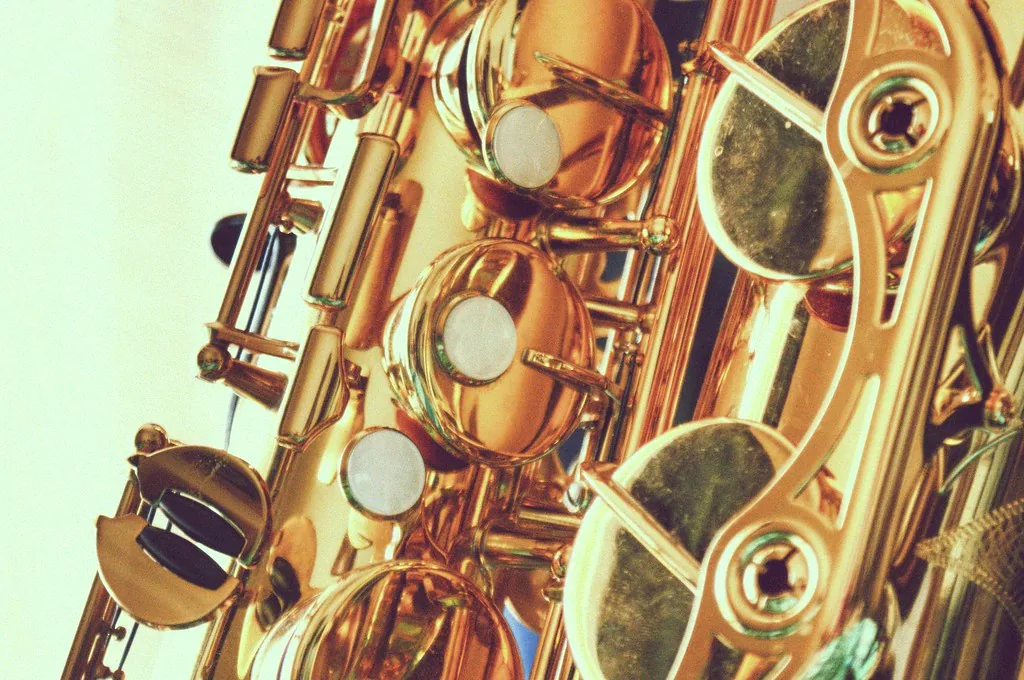
Brief introduction: This article explains the role of low-pitched models beyond their striking appearance. You will see when and why an ensemble chooses them.
The saxophone belongs to the woodwind family. Adolphe Sax invented it and patented it in Paris in 1846. The large instruments aim for a tone close to that of strings while retaining the projection of wind instruments.
What you will learn: You will understand how the low register provides a foundation and rhythmic and harmonic support. We will also distinguish the roles of low saxophones from those of the string double bass.
These models remain rare, bulky, and often reserved for specific purposes. Their availability strongly affects their use in a quartet, orchestra, contemporary ensemble, or jazz group.
By the end, you will know which instrument best suits the ensemble and the role you want it to play.
Understanding the low part in music: why these instruments exist
Low notes stabilize the key and give music depth. They provide a harmonic foundation by establishing the tonic and making chords easier to hear.
Rhythmic role: low notes anchor the pulse. In a group, they mark strong beats and strengthen the groove, especially in jazz, where the bass line creates movement.
A low-pitched instrument can support a chord progression, double a motif at the octave, or create a dark contrast by answering higher voices.
- Typical roles: tonic pedal, low ostinato, countermelody, or reinforcement of the full ensemble.
- Perception: warmth, power, and physical vibrations that fill the room even at a moderate volume.
- Placement: attack and register matter more than volume when finding a place in the mix.
| Role | Sonic effect | Practical example |
|---|---|---|
| Harmonic foundation | Stability, clearer chords | Tonic pedal in an orchestra |
| Rhythmic support | Anchoring the pulse and groove | Walking bass in jazz |
| Timbral contrast | Dark color, answering phrase | Doubling at the octave in a quartet |
For more on the history of low-pitched instruments in the orchestra, an instrument history and biography provides useful context.
The saxophone: a wind instrument in the woodwind family
Although it is made of brass, the saxophone belongs to the woodwind family for a simple reason.
Sound begins when a single reed vibrates against the mouthpiece, setting the column of air in motion. This mechanism defines the family, regardless of the material used for the body, even when it is metal.
The conical bore of the body affects the registers: it promotes an even progression of harmonics. To produce a full, stable low register, the taper maintains continuity between octaves.
Parts that shape the low sound:
- Bell: projection and richness of harmonics.
- Bow: connects the bore to the bell.
- Neck: affects response and resistance.
- Mouthpiece: attack and tone color.
The reeds, ligature, and mouthpiece model change the quality of the sound: a narrower opening or a harder reed can stabilize intonation. A wider opening adds presence but requires more breath support.

| Part | Effect | Practical consequence |
|---|---|---|
| Bell | Projection, warmth | Choice depends on the ensemble and venue |
| Neck | Response, resistance | Adjustment to obtain a full low sound |
| Mouthpiece and reeds | Tone color, attack | Adaptation to the repertoire |
To learn more about the history and classification of this wind instrument, read a detailed guide.
Bass and contrabass saxophones: what are they really used for?
The low saxophone plays a linking role among instrument sections. It sits between the E-flat baritone and the very lowest models. Within the saxophone family, it often supplies the low voice in large ensembles.
Practical roles in an ensemble
It doubles the bass line, reinforces the low notes of the harmony, and traces low countermelodies. Its use stabilizes cadences in an orchestra and supports the wind section.
A flexible, responsive low voice
Flexible here means the ability to articulate quickly, shape attacks, and blend readily with strings. Its rounded tone recalls the warmth of strings while retaining the attack of a wind instrument.
“Transposition lets players use the same fingerings across the family and avoids impractical written lines.”
Reading, transposition, and method
In practice, check the key signature, identify the registers, and anticipate ledger lines. The B-flat model sounds a major sixteenth below the written note: mastering transposition is essential for playing in tune.
| Use | Effect | Contexts |
|---|---|---|
| Doubling the bass | Harmonic stability | Concert bands, large ensembles |
| Low countermelody | Color and weight | Contemporary music, arrangements |
| Rhythmic support | A firm groove | Jazz, arranged music |
Projects needing an even deeper register turn to the contrabass model. For information on the string double bass, see the double bass.
The contrabass saxophone: a rare giant for an extreme register
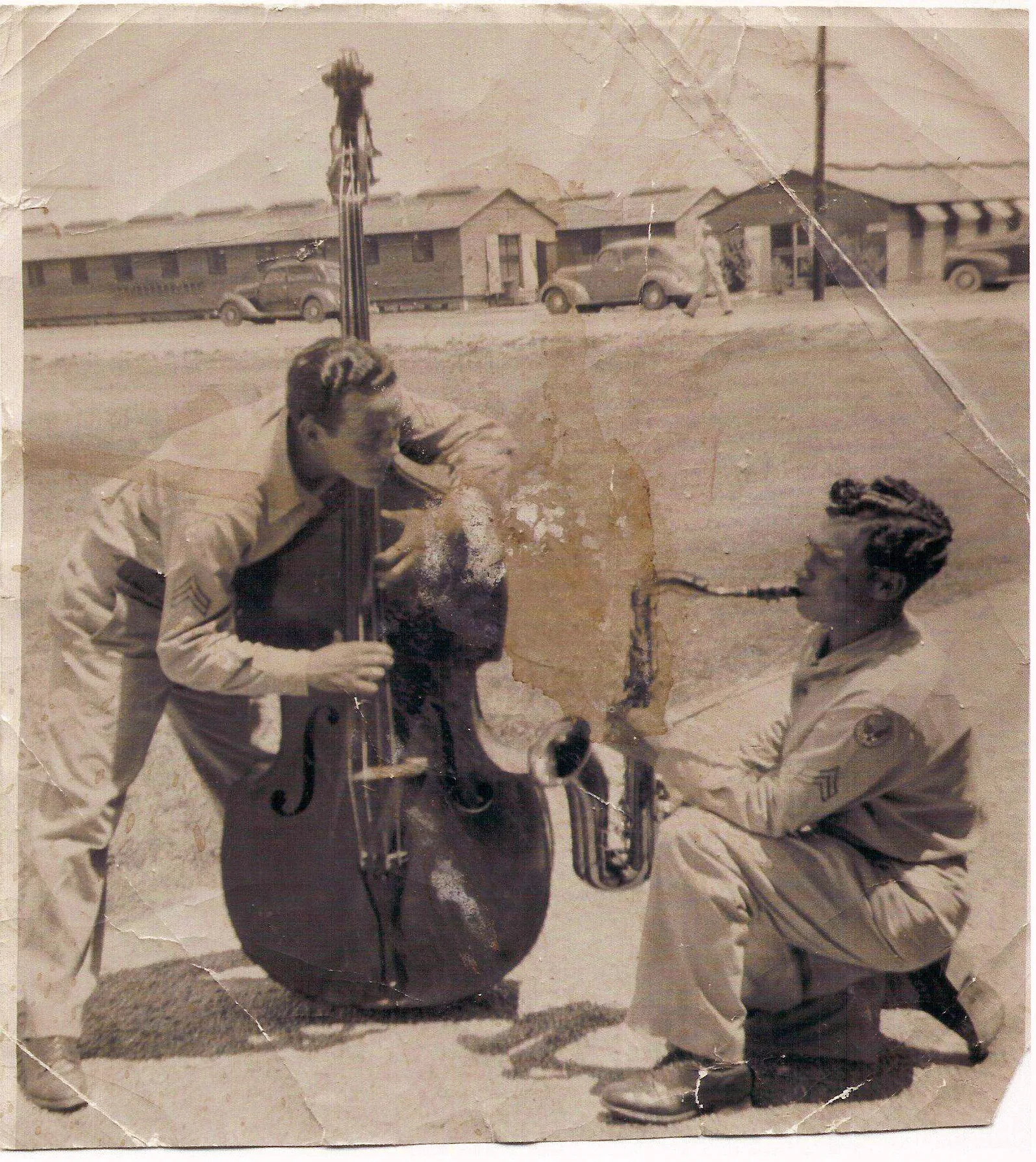
This large instrument produces low notes whose sound is more apparent than their notation suggests. The E-flat model actually sounds two octaves and a major sixth below the written note. For an arranger, its sounding range changes how parts and voices are written.
A history of rarity
About thirty examples were built between 1846 and 1999. Evette & Schaeffer (Buffet-Crampon) produced around twenty in the 1920s. Orsi resumed made-to-order production in the 1980s.
Practical constraints
It is often more than 2 m tall. Its massive tube and bell require a particular playing posture. Transport, the case, and storage sharply limit its use in a standard orchestra.
Uses and considerations
Uses: low sustained textures, dramatic reinforcement, and unusual timbres in contemporary music. The model and its construction determine the balance between power and playability.
| Strength | Limitation | When to use it |
|---|---|---|
| Deep, distinctive sound | Demanding logistics | Contemporary projects, sound effects |
| Stage presence | Limited availability | High-impact pieces |
| Unmistakable tone color | Physical fatigue | Recordings, dedicated solos |
From the historic saxophone to the tubax: rethinking the contrabass
As low-pitched instruments evolved, makers sought ways to retain deep notes without the unwieldy size of older models.
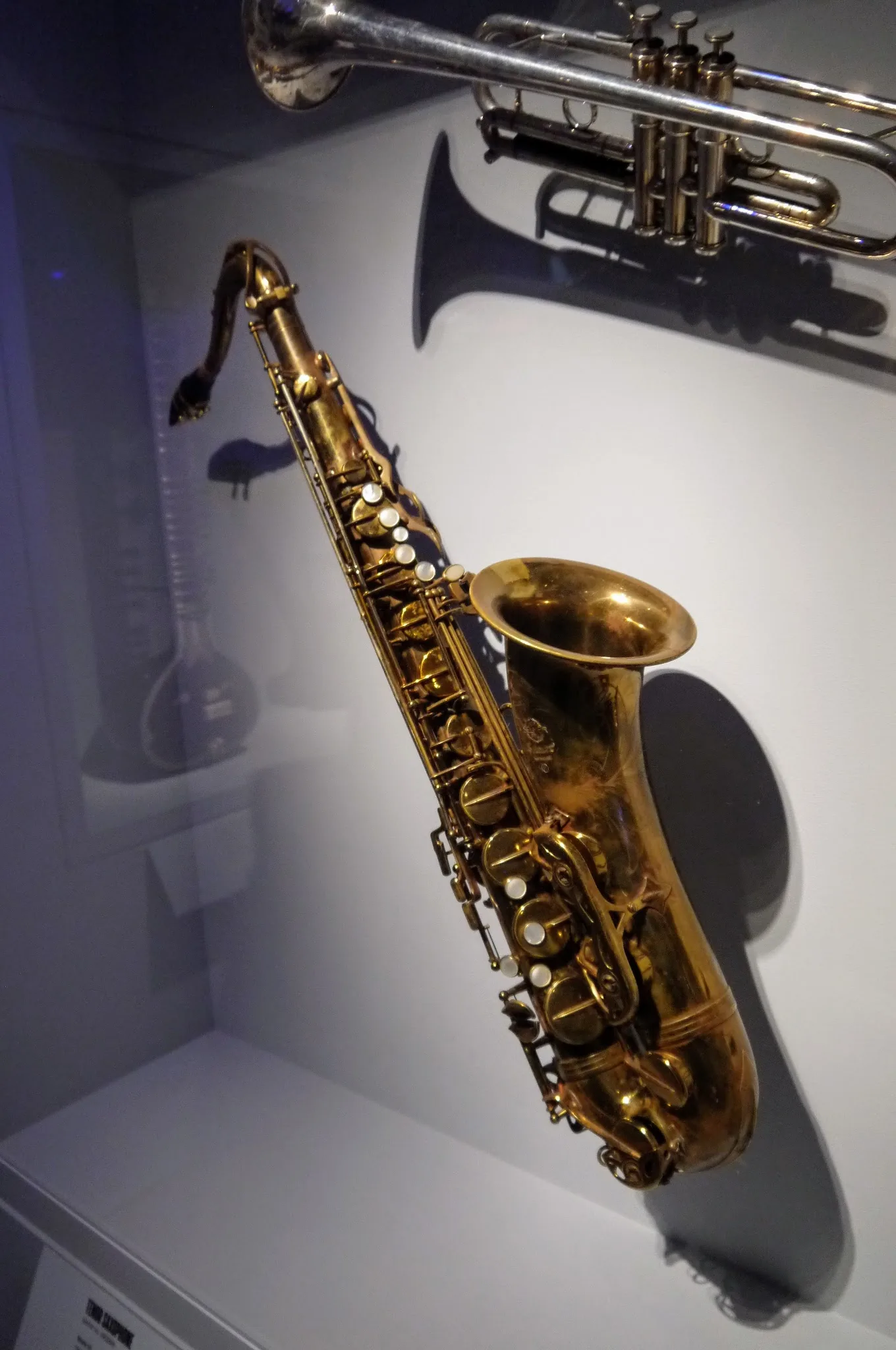
The tubax, developed in 1999 by Benedikt Eppelsheim, introduces a new design: a narrower tube with less taper. This changes its acoustic response and breathing resistance.
A different approach to construction
The narrower tube makes the instrument more compact. Its reduced taper gives it a tone associated with very low-pitched instruments, without the huge proportions of historic contrabasses.
Availability and practicality
Being easier to handle, it is more practical in concert. Transport, setup, and playing are easier, increasing its availability for projects.
Practical compatibility
Some models can use bass saxophone mouthpieces. This compatibility makes the instrument easier to take up: familiar accessories, known adjustments, and lower costs.
“The tubax makes the extreme low register more accessible without sacrificing the depth musicians seek.”
| Criterion | When to choose the tubax | When to prefer a historic model |
|---|---|---|
| Availability | Frequent projects, limited budget | Search for a unique tone color, collecting |
| Logistics | Easier transport and stage setup | Demanding logistics are acceptable |
| Repertoire | Orchestra, jazz, contemporary music | Pieces requiring the original timbre |
The double bass: the other low-register reference in orchestras and jazz
A major instrument in the low register, the double bass often provides the harmonic and rhythmic backbone.
Its origins go back to early models of the sixteenth century. The instrument took a more established form around 1620 and joined the orchestra in the seventeenth century. In the Romantic era, composers began assigning it parts of its own.

Physical characteristics
It generally stands between 1.6 and 2 m tall. Its shape resembles that of an enlarged violin. Its wooden body produces warm projection and rich harmonics.
Strings and tuning
The standard tuning is E–A–D–G. Some musicians choose a fifth string, tuned to C or B, to reach lower notes without transposition.
Playing techniques
Two techniques dominate: bowing, for lyrical lines and sustained notes, and pizzicato, for pulse and groove. Each produces a different sound.
Versatility and common uses
The double bass appears across classical music, jazz, tango, blues, and rock ’n’ roll. In jazz, a walking bass structures the beat; in an orchestra, the instrument supports full-ensemble passages.
To learn more about this essential instrument, read this dedicated guide: the double bass.
Comparing low saxophones and double bass: roles, timbres, and choices by context
The choice of a low-pitched instrument depends as much on the desired timbre as on practical constraints. It weighs the breath-driven sound and clear attack of winds against the sustain and legato of strings.
Winds and strings: attack, sustain, articulation
Wind instruments have a more pronounced attack and allow rapid articulation.
Strings offer longer sustain and natural legato when played with a bow.
Who plays what in an orchestra or quartet
In a concert band, low-pitched instruments often double bass lines to stabilize the harmony.
In a saxophone quartet, a low instrument extends the range and colors sustained textures.
In jazz: walking bass, harmony, and rhythm
In jazz, the string double bass traditionally carries the walking bass and the pulse.
Low saxophones mainly add tone color or provide occasional rhythmic reinforcement.
Criteria for beginners and musicians
For beginners, size, transport, and the availability of sheet music matter greatly.
A manageable low-pitched instrument is often the best compromise for active musicians.
| Criterion | Choice | Advantage |
|---|---|---|
| Foundation | String double bass | Versatility, repertoire |
| Color | Low saxophones | Distinctive timbre |
| Logistics | Bass saxophone | Transport and availability |
“The right low-pitched instrument serves the musical project and suits its practical needs; depth of range alone should not decide the choice.”
Conclusion
Using the very low register meets a need for foundation, depth, and sonic impact.
Summary: low saxophones extend the range and offer distinctive colors, while the string double bass remains a mainstay for carrying harmony and rhythm.
The choice depends on the setting (orchestra, quartet, or jazz), practical constraints, and the desired sound: the attack of a wind instrument or the sustain of a string instrument.
The E-flat contrabass saxophone is a rarity suited to specific projects; the B-flat bass saxophone is more accessible. Listen to examples, consult scores, then try the instrument in rehearsal before making a final choice.