

A practical guide to what you can expect from an often overlooked accessory.
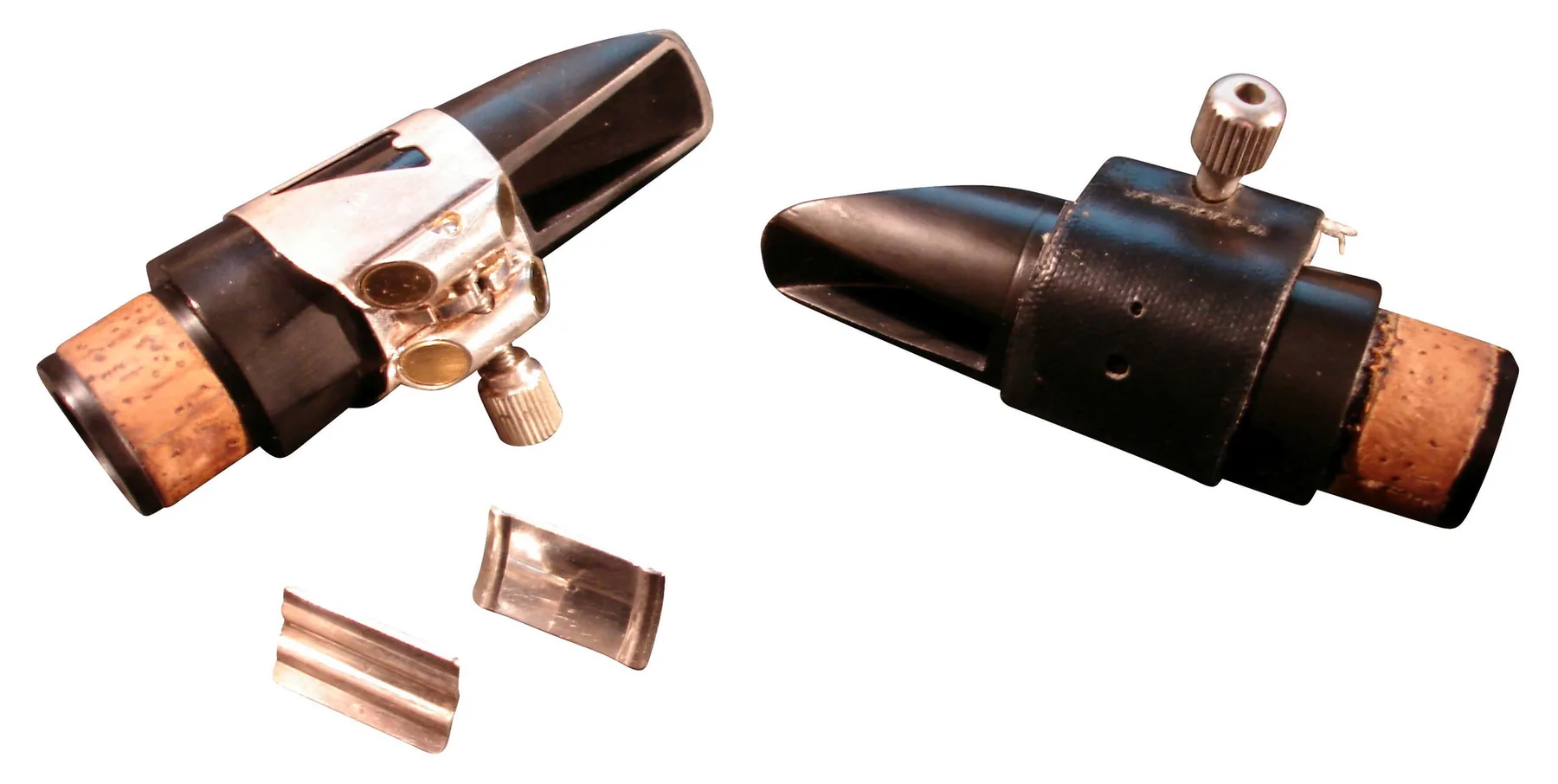
The ligature holds the reed against the flat table of the mouthpiece while allowing its free end to vibrate. It is essential for producing a sound.
It does have an effect, but that effect is mainly a matter of fine adjustment. Experienced players are more likely to notice differences, which also depend on playing habits.
The choice depends on the setting: in a studio or small room, a fabric model gives an intimate sound. In an auditorium, metal favors projection.
What this guide covers: comfort, consistency, a secure hold, response, tone and projection. The aim is to buy more wisely, not necessarily spend more.
This guide is for beginners who want to avoid mistakes, intermediate players seeking greater consistency, and experienced musicians who want to fine-tune their setup for different repertoire.
What a saxophone ligature does and what it really changes
Its mechanical function is simple: the ligature holds the reed against the flat table of the mouthpiece and provides the seal needed for regular vibration.
Without it, the reed moves and the sound becomes unstable or may be impossible to produce. Contact between the ligature, reed and mouthpiece determines which part of the reed can vibrate.
The setup works as a whole: the mouthpiece, reed and ligature vibrate together. Perceived differences are often subtle. What players tend to notice most is better response, a more focused sound and more reliable attacks.
Imagine a ruler resting on the edge of a desk: clamp down one part and leave the other free, and you change the part that vibrates. The principle is the same.
What it really changes: the consistency of sound production, clamping comfort, a slight difference in tone color and sometimes a feeling of greater openness. Beware of common assumptions: a higher price does not guarantee a miraculous sound, and no material will radically transform a poorly matched mouthpiece.
“A ligature helps optimize your sound; it cannot replace a good mouthpiece, a suitable reed or breath control.”
- Next step: assess pressure, position and stability to make an informed choice.
The factors that affect sound and playing comfort
Several simple adjustments have a strong effect on comfort and sound. The pressure points mainly determine the seal between the reed and the mouthpiece table. Depending on the reed and mouthpiece, the difference is often secondary, though it can sometimes be heard.
Position: placing the ligature higher, toward the tip, gives a brighter, more focused and sometimes tighter sound. Lower, toward the heel of the reed, the tone becomes broader and darker. These reference points are useful across the low, middle and high registers.
Pressure and tightening require balance: overtightening makes the setup too rigid, while insufficient pressure causes air leaks and uneven attacks. Aim for the point where the reed stays in place without being crushed.
Stability: one screw is enough in most cases; two screws can provide an even hold but require care to avoid overtightening. Orientation and design change the contact area and response.
| Factor | Effect | Practical advice |
|---|---|---|
| Pressure points | Seal and stability | Align the reed and tighten gradually |
| Position | Brighter or darker sound | Test higher and lower positions in every register |
| Pressure and tightening | Brightness and roundness according to tension | Find a hold that does not crush the reed |
| One or two screws | Stability and the risk of stifling the sound | Favor consistency and small adjustments |
“Check the alignment, tighten in small increments and test every register.”
For a detailed approach, see this testing method.
Metal, fabric, leather and polymer ligatures: understanding material differences
Each material brings a nuance: some favor projection, while others soften the tone color.
Metal
Metal often brings more brightness, power and a more immediate response. It can suit situations where you need to carry in a large hall or support a solo. Projection is generally stronger.
Fabric and leather
Fabric and leather tend to produce a rounder sound and an intimate warmth. Players appreciate their more flexible feel for chamber music or studio work.
Pressure plates and inserts
A metal plate increases brightness and projection; a rubberized plate brings more roundness and warmth. For example, the Vandoren Optimum offers several interchangeable plates; some BG fabric models also offer inserts.
Wood and polymers
Wood and polymers stand out mainly for their durability, weight and ergonomics. Their effect on sound is difficult to isolate in a public listening test.
“Choose a family first—metal, fabric or leather—then refine your choice by considering the plate, contact area and tightness.”
Saxophone ligatures: real impact and selection criteria for your setting
Your playing setting often guides the choice: each situation calls for particular qualities.
Small rooms, studios and chamber music: consider a fabric or leather model. These options offer a rounded sound and a flexible feel. They make it easier to shape dynamics and maintain control at low volume.
Large halls, orchestras and solo playing: consider a metal model. It favors a clearer attack and a stronger presence within an ensemble.
By style: in classical music, look for stability and an even sound. In jazz, favor flexibility and a distinctive sound. In rock or pop, seek a presence that cuts through the mix.
By experience level: beginners need reliability and simplicity. Advanced and professional players can refine their tone for the room and repertoire.
| Setting | Desired qualities | Suggested type | Practical advice |
|---|---|---|---|
| Studio and chamber music | Roundness and nuance | Fabric or leather | Test in the pianissimo range |
| Large hall and orchestra | Presence and attack | Metal | Check control at fortissimo |
| Varied uses | Versatility or specialization | Possibly two ligatures | Choose according to your most frequent needs |
“The best ligature is the one that suits you best.”
How to test a ligature and choose with confidence
To identify real differences, start with a clear, repeatable reference. Play the same passage in the same room after the same warm-up.
A simple procedure:
- Establish a reference with your usual ligature: a familiar piece, long tones and scales.
- Change only one factor at a time: first the ligature, then the reed and finally the mouthpiece.
- Note what changes: stability, attacks and control in the high register.
What to listen for: an even sound across the low, middle and high registers, ease of transition, consistent volume and quality of attack.
Test the extremes: a stable pianissimo, then a controlled fortissimo. Check articulation and detached notes. Try three levels of tightness with the same ligature.
| Step | Action | Purpose | Indicator |
|---|---|---|---|
| Reference | A familiar piece and long tones | A basis for comparison | Sustained notes and focus |
| One change | Change the ligature, reed or mouthpiece | Identify the cause of a difference | An audible change |
| Dynamic range | Pianissimo and fortissimo | Assess dynamic range | Control without harshness |
| Outside opinion | A recording or a fellow musician’s assessment | Compare your impression with the projected sound | Independent feedback |
“Keep the option that improves something specific without making something else worse.”
Conclusion
In short: the ligature is essential for producing a stable sound. Its main role beyond that is to refine response, consistency and tone color without transforming the instrument.
Adjustments to master in daily playing: placement along the reed, tightening pressure, stability with one or two screws, and contact area. These bring the most tangible gains.
Setting matters most: small rooms and studios call for roundness and intimacy; large halls favor projection and brightness. Always test in real playing conditions.
Recommended method: establish a reference, change one element, explore the dynamic range and check the result with a recording or a fellow musician’s opinion. Getting your mouthpiece and reeds right remains a priority before buying a new ligature.
A simple rule: the best choice meets your musical needs day after day.