

This buying guide is for musicians in France considering a B-flat instrument. It sets the scene: the high register, popularized by Sidney Bechet and later by John Coltrane and Wayne Shorter, calls for a more precise approach than other models.
Here you will find technical criteria, realistic budgets and a selection of models suited to beginner, intermediate and advanced players. We will explain the strengths (a bright tone, expressiveness) and the risks (demanding intonation and a sometimes shrill sound if the instrument is poorly adjusted).
The approach is simple: understand the instrument, compare straight and curved models, assess the criteria and budget, then try one before buying. Useful terms — mouthpiece, reed, ligature, keywork, bell and neck — will be explained in the technical sections.
Finally, remember that this is a transposing instrument in B-flat, which affects reading music and playing in tune. Your choice of model should always follow the principle skill level → need.
Why choose a soprano saxophone today?
Few instruments catch the ear quite like the soprano’s high register. Its direct, bright tone often brings it to the front of a mix and lets it carry a melody without getting lost in the ensemble.
A high register with a character of its own
Historically, Sidney Bechet left a major mark. Later, John Coltrane and Wayne Shorter took the instrument into modern exploration.
“The soprano’s timbre combines clarity and presence while demanding control and a good sense of intonation.”
Which styles suit it best?
In jazz, it serves as a solo instrument for bold melodies. In classical music, players seek a more controlled, rounded tone.
In contemporary music, it plays catchy lines, effects and amplified parts. Many musicians add it as a second instrument for its distinctive color, complementing the alto or tenor.
The choice of mouthpiece and reeds changes the result dramatically: a closed chamber and softer reed for classical playing, or a wider tip opening and stronger reed for a projected jazz sound.
As a practical rule, the soprano works well if you want to “cut through” an ensemble, but it requires regular intonation work. Listening to a range of references — saxophonists such as Stan Getz, Michael Brecker, Manu Dibango and Ornette Coleman — helps define the sound you want.
To compare makes and models before buying, consult a selection of saxophone brands.
The soprano saxophone in the saxophone family
In the large family of wind instruments, the soprano occupies a high register. The modern family includes the sopranino (E-flat), soprano (B-flat), alto (E-flat), tenor (B-flat), baritone (E-flat), bass (B-flat) and contrabass (E-flat).
A transposing instrument sounds a different pitch from the written note. On a B-flat instrument, a written note sounds a major second lower. This transposition affects ensemble playing and the arrangement of parts.
Compared with the alto and tenor saxophones, the soprano has a brighter timbre, a higher range and an often melodic role. The alto offers balance for countermelodies; the tenor provides a fuller foundation in a section.
- Big band: the soprano adds color to solos.
- Jazz trio: it carries the melody or creates contrasts.
- Concert band: it occasionally plays a high line.
If you want to broaden your range of sounds, a B-flat instrument can be a worthwhile second choice. Be aware that tuning errors are more exposed because the high register stands out clearly among the other saxophones.
Understanding these differences helps you choose a model, mouthpiece and accessories that suit the musical role, and prepare for trials in a shop or rehearsal. For a broader overview of wind instruments, see this guide to wind instruments.
Soprano anatomy: what shapes the sound?
Every part of the instrument contributes to its final tone.
Mouthpiece, reed and ligature: how the sound begins
Air makes the reed vibrate against the table of the mouthpiece. The ligature holds the reed in place; how tightly it is fastened affects the attack and stability.
Straight or curved neck: effects on response and comfort
The conical neck affects response and resistance. A straight neck helps with positioning and projection; a curved neck improves ergonomics.
Body, keywork and octave key: ergonomics and precision
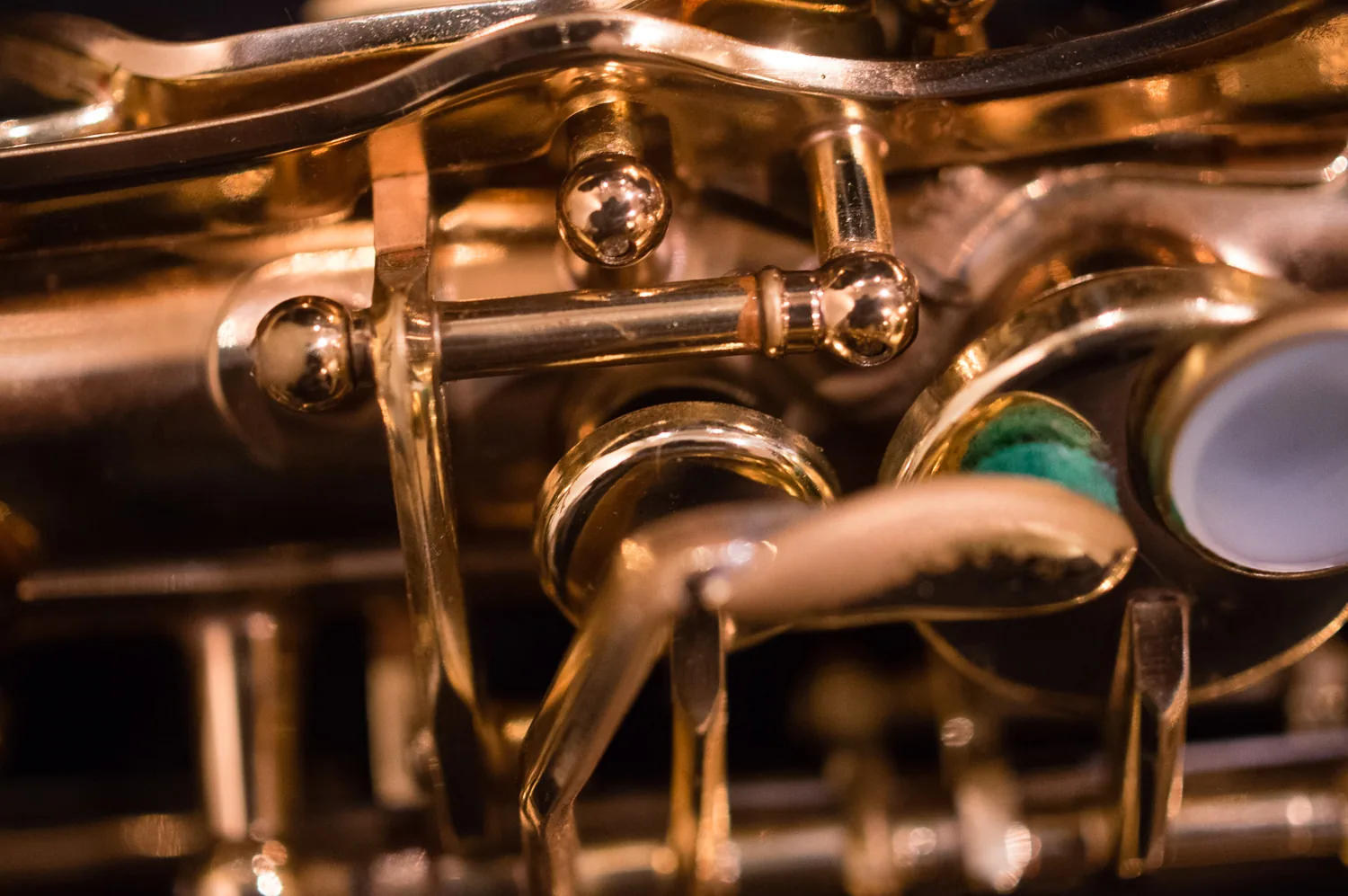
Check the alignment of the keys, the height of their touchpieces and the octave key adjustment.
A well-adjusted body and airtight keys improve intonation.
Bell and projection: sound spread and presence in a mix
The bell shapes how the sound spreads. When playing in a group, its shape and diameter affect your presence.
| Part | Effect | What to check |
|---|---|---|
| Mouthpiece / reed | Attack, tonal color, stability | Mouthpiece opening, reed strength, ligature |
| Neck | Resistance, positioning | Straight or curved, taper |
| Body / keys | Intonation, smooth transitions | Alignment, airtight seal, number of keys (18 to 22) |
| Bell | Projection, presence | Diameter, finish |
Advantages of the soprano saxophone
For an immediate presence, nothing replaces a clear sound rich in harmonics.

Bright, penetrating tone
The timbre stands out for its clarity and ability to carry a melody. The tone is precise and easy to hear, making it ideal for solos.
It offers a wealth of harmonics, helping a note cut through an ensemble without losing its color.
Compact size and transport
Its small size makes it easy to carry. A good padded case makes traveling with the instrument easier.
Some models, such as the Woodbrass WSS300, come with a backpack-style case that is handy for rehearsals and concerts.
Expression and playing style
The register allows pronounced vibrato, subtle dynamics and fine articulation.
With the right mouthpiece and reed pairing, the sound becomes rounder without losing projection.
“A compact, expressive instrument that can make itself heard: that is why many players keep it as a second voice.”
| Strength | Musical effect | Practical use |
|---|---|---|
| Bright tone | Melodic reach, rich harmonics | Solos, small ensembles |
| Small size | Easier transport | Travel, lessons, rehearsals |
| Expressiveness | Vibrato, subtone, quick articulation | Various styles, complement to alto or tenor |
To compare models and find the best balance of quality and ergonomics, consult a selection dedicated to the soprano saxophone. These advantages still depend on control of intonation and sound production.
Limitations and difficulties to anticipate before buying
Intonation is more demanding in this register. The shorter tube leaves less room for correction: a tiny leak or imperfect adjustment immediately affects the notes.

Intonation compared with the alto and tenor
Unlike the alto or tenor, which conceal small errors more readily, this instrument exposes every variation. Musicians must watch the pad seals and how firmly the mouthpiece is fitted to stabilize the tone.
Fatigue, embouchure and breath control
Embouchure tension builds quickly in the upper register. A gradual warm-up and breaks help prevent fatigue.
Avoiding a “screaming” sound
An aggressive sound often comes from a mouthpiece with too wide an opening paired with an unsuitable reed, or from an overly abrupt attack. For beginners, a more closed mouthpiece and softer reeds make sound production easier.
| Problem | Common cause | Quick solution |
|---|---|---|
| Unstable intonation | Leaks, worn pads | Inspection, adjustment, regular maintenance |
| Fatigue | Poor breath support | Warm-ups, breaks |
| Shrill sound | Overly open mouthpiece / hard reed | More closed mouthpiece, softer reed |
These issues affect the quality of your playing and the instrument’s longevity. The next section considers straight and curved models, a choice that affects comfort and stability.
Straight or curved soprano saxophone: which type should you choose?
The instrument’s shape directly affects a player’s comfort and posture.
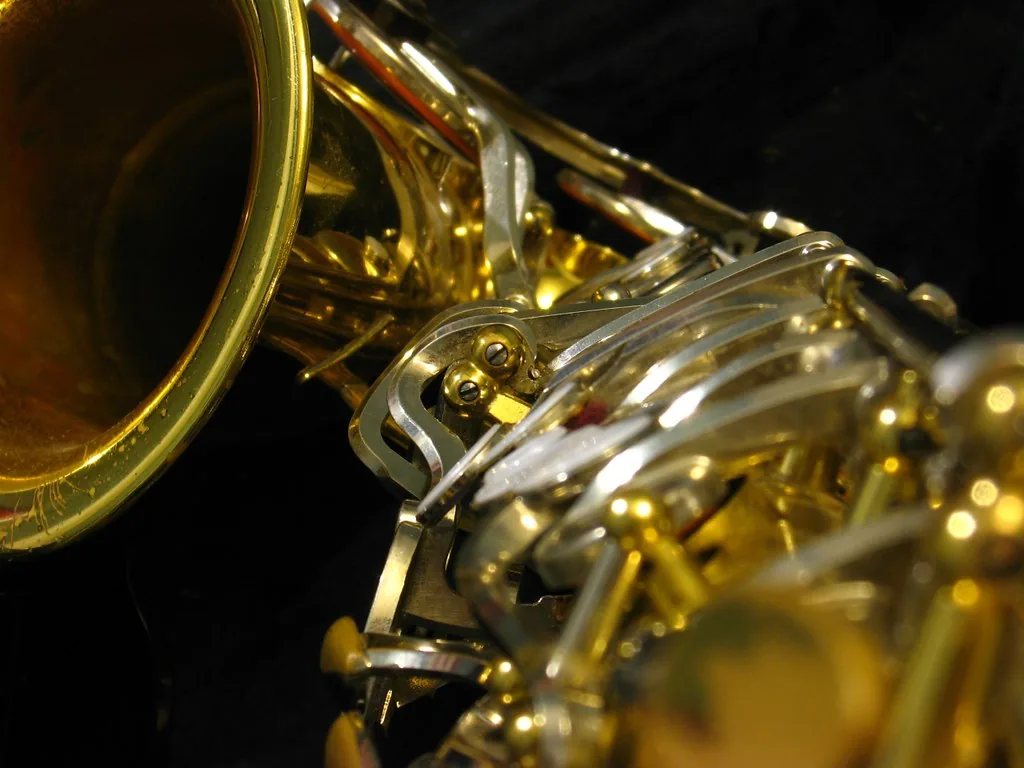
Ergonomics come first. The curve changes the mouthpiece angle, head position and hand placement.
The straight soprano: an upright feel and direct projection
The straight model feels somewhat like a clarinet. It offers direct projection and familiar intonation reference points.
The curved soprano: posture and adjustment
The curved version places the bell lower. It often eases strain on the neck and wrists. The Thomann TCS-350 is an accessible example appreciated for its ergonomics, though it can take time to get used to.
Two supplied necks: a real advantage
Some models, such as the Woodbrass WSS300, come with a case, a straight neck and a curved neck.
“Being able to try both configurations without changing instruments makes the choice easier.”
| Type | Characteristics | Practical use |
|---|---|---|
| Straight | Direct projection, clear reference points | Solos, traditional playing |
| Curved | Ergonomics, comfort | Long sessions, posture |
| Two necks | Flexible choice | Trying both in real playing conditions |
Practical note: a sturdy case and a complete set of accessories often matter more than a decorative finish when buying online.
Once you have chosen the shape, match the model to your level (beginner, intermediate or professional).
Soprano saxophone: advantages, limitations and buying advice
Before buying, turn your needs into concrete criteria: intonation, mechanism, projection and finish.
Beginners: establish reliable intonation
Beginners should favor simple keywork and good pad seals. A forgiving instrument makes it easier to produce a sound.
Intermediate players: aim for reliability
Developing musicians look for reliable keywork, better projection and an even response across registers.
Advanced or professional players: demand a refined finish
Experienced musicians prioritize bore stability, immediate response and careful finishing. Build quality becomes decisive.
“A well-adjusted mid-range instrument is better than a poorly set up top-end one.”
| Player | Priority | Recommendation |
|---|---|---|
| Beginner | Intonation, forgiving response | Well-adjusted entry-level model |
| Intermediate | Keywork, projection | Reliable mid-range model (Yamaha YSS-475 II) |
| Advanced / professional | Stability, finish | High-end model (Selmer SA/80 Series II) |
Tip: choose a brand with an after-sales service network in France. Projection often depends on adjustment, not just price.
The next section compares measurable technical criteria: materials, keywork, pads and included accessories.
Technical criteria to compare before ordering
Differences in construction directly affect stability, longevity and sound.
Materials and finish
Check the material: lacquered brass remains the standard because it resists oxidation. Brushed or engraved finishes are primarily aesthetic choices.
Build quality (including solder joints and tone holes) affects how the instrument holds up over time.
Keywork and playing comfort
Test the keywork: smooth action, no sideways play, aligned keys and an adjustable thumb rest are essential.
Well-made keywork makes attacks and accurate playing easier.
Pads and airtightness
Even a small leak upsets intonation. Ask about the condition of the pads (Pisoni pads, for example, on some models) and request an inspection before shipping.
Included accessories
A product listing should mention a mouthpiece, ligature, mouthpiece cap, at least one reed, a maintenance kit (swab and pad dryers) and a protective case.
The supplied mouthpiece may serve initially, but plan to replace it to suit the style you want.
| Criterion | What to check | Why it matters |
|---|---|---|
| Materials / finish | Lacquered or brushed brass, solder joints | Durability, scratch resistance |
| Mechanism / keywork | Smooth action, alignment, adjustable thumb rest | Comfort, finger speed |
| Pads | Condition, brand, airtight seal | Intonation and stability |
| Accessories / case | Mouthpiece, ligature, reed, kit, case | Ready-to-use convenience |
Budget and price ranges in France: what to expect
Before deciding, distinguish what each price range actually offers. Your budget affects the keywork, consistency of intonation and finish. It also affects additional costs: a mouthpiece, reeds and adjustments by a repair technician.
Entry level: getting a good start
At around €400 to €600, a model such as the Woodbrass WSS300 (about €459) lets you start without spending a fortune.
Expect an average finish. Check the pad seals, keywork and included accessories to avoid hidden costs.
Mid-range: stability for progress
The €1,500 to €2,500 range offers a real improvement in quality. Examples include the Jupiter JSS1000Q (about €1,749) and Yamaha YSS-475 II (about €2,219).
You gain better intonation, playing comfort and durability. This is often the best choice for committed musicians who rehearse regularly.
High-end: projection and consistency
Above €5,000, the differences lie in projection, tonal consistency and construction choices such as a one-piece tube.
The Selmer SA/80 Series II (about €7,389) illustrates this level: pronounced upper harmonics, a lightweight case and a branded mouthpiece are included.
| Range | Indicative price (France) | What it offers | What to check |
|---|---|---|---|
| Entry | About €400 to €600 | A way to get started; accessories sometimes included | Adjustment, pads, airtightness |
| Mid-range | About €1,500 to €2,500 | Better keywork, intonation and comfort | Quality control, after-sales service |
| High-end | About €5,000 to over €8,000 | Projection, finish, specialized tube construction | Actual value for the individual player |
Practical tip: allow for reeds, a good mouthpiece and an initial adjustment in your budget. Investing in a well-adjusted mid-range model is better than buying a high-end instrument before you can make full use of it.
Recommended soprano saxophone brands and models
This selection brings together reliable options to guide your choice according to your budget and intended use.
Entry level: Woodbrass WSS300
Why buy it: light keywork, an ergonomic thumb rest and two necks (straight and curved).
Supplied with a backpack-style case, it remains a useful starting point without sacrificing stability.
Mid-range: Jupiter JSS1000Q
Adjustable keys, a reinforced bell and Pisoni pads support careful intonation.
The package is complete: mouthpiece, ligature, mouthpiece cap and lightweight case.
For continued progress: Yamaha YSS-475 II
Known for reliability and durability, this brand offers a balanced instrument for regular rehearsals.
High-end: Selmer SA/80 Series II
One-piece tube, strong projection and pronounced harmonics. Supplied with a “Light” case and a Selmer Paris mouthpiece.
Alternatives to consider
Consider the Yanagisawa S-WO10 and Selmer SE-S3B, depending on availability. The curved Thomann remains an ergonomic option if comfort is your priority.
“At the same price, favor a brand with quality control and a repair network in France.”
Practical tip: always compare the supplied case and included accessories to judge the true cost.
Essential accessories for getting the most from your soprano
The right accessories can quickly turn a decent instrument into a reliable tool for everyday playing. They affect response, intonation and longevity more than you might think.
Choosing a suitable mouthpiece
Choose a small tip opening to make sound production easier at first. A larger opening can enrich the sound but requires more control.
Materials: hard rubber remains versatile; metal emphasizes projection in jazz.
Reeds and ligature
For reed strength, aim for 1 to 2.5 as a beginner and 2 to 3.5 as an advanced player. Strength changes the attack and timbre.
The ligature affects response: fabric for a warm sound, leather for a compact sound and metal for a direct sound.
Comfort, tools and maintenance
A good neck strap or harness relieves neck strain during long sessions. Choose a sturdy case (Gator, for example) to protect the instrument in transit.
A chromatic tuner (Cherub WMT-565) and metronome (Korg KDM-3) help you work on intonation and precision. A maintenance kit (swab and pad dryers) limits moisture and preserves pad quality.
“Investing in a good mouthpiece and suitable reeds improves your tone faster than changing instruments.”
Tips for trying and buying without costly mistakes
Before investing, test the instrument in real playing conditions. A careful trial quickly reveals its quality and any adjustments it needs.
Checklist for a quick trial
- Check intonation on sustained notes from low to high.
- Test pianissimo attacks and crescendos to assess how easily it speaks.
- Play slow and then fast slurred passages to find notes that resist.
- Check the octave key: the transition should be clean, without unintended jumps.
- Inspect the keywork for smooth action, play and unwanted noise.
New or used: what to inspect
On a used instrument, inspect the pads, play in the key rods, joints and overall condition of the keys.
It is wise to allow for servicing: restoring airtightness or worn keywork can quickly become expensive.
For a new instrument, request an inspection and adjustment before shipping so that you do not receive a poorly set up model.
Delivery, returns and safe online buying
Check that the advertised accessories are included and read the returns policy. Favor a seller who offers a pre-delivery adjustment.
Practical rule: if shipping includes an inspection by a repair technician, the instrument should arrive ready to play.
A cheap soprano or used model may cost more after repair work.
To round out your research, consult this wind instrument buying guide.
Conclusion
In short, balance quality, ergonomics and adjustment before deciding. The soprano saxophone offers a distinctive tone but demands careful attention to intonation.
First define how you will use it (style and ensemble), choose a shape (straight or curved), then compare the technical criteria and models mentioned.
Remember the importance of the mouthpiece, reed and ligature together: they often help stabilize sound production and avoid an overly aggressive timbre.
Next step: shortlist two or three models, arrange a trial with a return option and include essential accessories in your budget.
Favor a reliable, well-adjusted instrument over a premature move to the high end. For an estimate or trade-in, take advantage of a free valuation.
Finally, choose a coherent combination of instrument and accessories, and plan a maintenance routine to preserve quality and support your progress.