


In the world of saxophones, some instruments become cultural touchstones. The Mark VI, produced from 1954 to 1973, was adopted by John Coltrane, Stan Getz and Sonny Rollins. Its ergonomic keywork and narrower bore offer great flexibility while retaining excellent projection.
This introduction sets out the “History Notes” approach: separating legend from the actual timeline and connecting industrial history with the playing qualities musicians seek. We will clarify serial numbers and variations between markets.
The “myth” rests on ergonomics, tone and perceived consistency. The article will also explain common misconceptions: magic serial numbers, missing markings, and beliefs about the best years or lacquer.
By the end, you will know how to place an instrument in its historical context and distinguish what comes from the mouthpiece, reed or player. For a detailed look at its history, read these History Notes.
The origins of a legendary Selmer lineage
The industrial timeline sheds more light on this history than the legend does. Decisions made between 1922 and the 1950s laid strong foundations. The company sought to mass-produce reliable, standardized saxophones.
The “1922 Series,” or Model 22, marked an industrial turning point. Drawn tone holes reduced leaks. An automatic octave key became available as an option. The Model 26 and SSS series followed as experimental phases, during which bodies, bells and mechanisms were combined according to available stock.
Balanced Action: a true revolution
The Balanced Action (1936–1947) redesigned the keywork. The low B keys moved to the right, improving the balance of the mechanism. The ergonomics became more modern, and a high F-sharp key was offered as an option.
Super Action: the decisive transition
The Super Action (1948–1953) introduced a removable bow. Maintenance became easier and the design more modular. Offset keywork improved comfort for both hands.
“These innovations show that major technical success never comes from a single breakthrough, but from a series of coherent improvements.”
- Continuity: a production line designed for reliability.
- Industrialization: standardized parts and consistent instruments.
- Ergonomics: gradual improvements to keywork and keys for the player’s comfort.
| Period | Innovation | Impact |
|---|---|---|
| 1922–1926 | 1922 Series – drawn tone holes | Fewer leaks, greater consistency |
| 1926–1928 | Model 26 / SSS | Experimental phase, mixed parts |
| 1936–1947 | Balanced Action | Redesigned keywork, improved ergonomics |
| 1948–1953 | Super Action | Removable bow, greater modularity |
Next: the actual timeline of the following instrument must be understood through serial numbers and production transitions, not solely through an official launch date.
History Notes: the birth of the Mark VI and its actual timeline
Its emergence as a production instrument happened in stages, visible in the serial-number ranges. The transition from older to newer instruments was gradual. The story is told by the production runs, not by a single date.
1952 and the prototype period
Trials around serial number 49,000 (1952) correspond to prototypes. Some instruments show features of the new design before production had stabilized.
The move into production
Trials began in the low 54,000 range, with production increasing toward 55,000. Several types of instrument then coexisted: prototypes, new production runs and older models overlapped.
Thresholds by instrument family and a landmark shipment
Thresholds by family: tenor ≈ 54,500, alto ≈ 55,000, baritone ≈ 56,000, soprano ≈ 69,000. These thresholds help prevent dating errors caused by applying one marker to every instrument.
On March 19, 1954, instrument number 53,727 was shipped to the United States. It was an alto, not a tenor, and it was not the “first” of the series. After that shipment, production remained largely devoted to the Super Action: of the next 1,000 instruments, only 56 belonged to the new line.
“The actual timeline shows a gradual transition in which a serial number often becomes the stuff of legend.”
| Period/marker | Number range | Significance |
|---|---|---|
| Prototypes | ≈ 49,000 | Initial trials (1952) |
| Production trials | Low 54,000 range | Gradual transition |
| Full production | ≈ 55,000 | Stabilized production |
| Thresholds by family | 54,500–69,000 | Tenor, alto, baritone, soprano (each family evolved at its own pace) |
Selmer Mark VI: why this model still fascinates musicians
Small workshop adjustments translate into playing comfort you can feel from the first minute.
The smoother keywork makes note transitions easier and reduces fatigue. Fingers move with less effort, helping to steady phrasing and build confidence in performance.
The narrower bore offers great flexibility. Players can shape the attack, dynamics and tone without losing the projection needed in the studio or onstage.
- Useful details: a redesigned octave-key thumbpiece, plastic thumb rests and an optional harmonic key to make altissimo notes more secure.
- Versatility: the instrument appeals to jazz and classical players, in the studio and onstage, thanks to its evenness and response.
“Gérard Badini points out that the mouthpiece and reed often change the result more than small variations between production runs.”
The mouthpiece-and-reed pairing (an Otto Link with a medium-strength reed, for example) can shape the opening and resistance. In practice, the instrument reveals the player, while the result also depends on embouchure, physical characteristics and style.
For an analysis of its reputation and tone, see this article about the legendary saxophone: historical and tonal analysis.
Serial numbers, markings and legends surrounding the Mark VI
Numbers and engravings often tell more stories than official catalogs.
Origin of the name: the designation was initially an American marketing creation, much like Balanced Action or Super Action. It identified a recognizable generation while simplifying a more nuanced industrial reality.
A famous example: instrument number 53,727, shipped to the United States on March 19, 1954, was an alto, not a tenor. It was not the “first” of the series, only the first to arrive in America. A photograph or caption can turn that number into a myth.
Absence of early markings: for almost eight years, the Paris factory did not explicitly inscribe the designation on the instrument’s body. A missing engraving does not mean that the instrument is outside the series; its serial number, mechanical features and export history must be considered together.

Identifying an instrument intended for the American market: the “Mark VI” engraving applied in Elkhart, Indiana, often includes the ® symbol. Without it, the instrument may have been intended for another market.
French markings: the famous “vertical marking” appears around serial numbers 141,000 to 143,000. The inscription later moved to the bell ring or bow, following a practice that became standard worldwide.
“There are better and worse instruments in every production run; adjustment, the mouthpiece and use matter as much as the number.”
The “under 100,000” debate: this belief persists, but needs qualification. Rather than a magic cutoff, the evidence shows variation in production. For more on the industrial and sociological context, read this academic article.
A point of transition: these differences in markings and markets go hand in hand with differences in finish, lacquer and mechanical work, which the next section covers.
France and the United States: production, lacquer, adjustment and the soldered bow
You can trace a production process by following a saxophone from Mantes to Elkhart.
Mantes-la-Ville: from the workshop to the assembled saxophone
Henri SELMER Paris manufactures and assembles most parts in Mantes-la-Ville. Bodies, bells and mechanisms are fitted together, then packed in groups of four, with the necks packed separately.
Elkhart, Indiana: finishing and final adjustment
In Elkhart, the instruments are disassembled, padded, finished and adjusted. This work explains why some people mistakenly say they were “assembled in the USA,” although most of the work had been done in France.

Lacquer and bow: clues to the intended market
The lacquer applied in the United States is often darker. Perceived sound may vary, but wear and adjustment have a greater effect than lacquer alone.
The bow soldered in the United States remains a common mechanical clue. In Europe, the bow was often left unsoldered. To check an instrument’s authenticity, examine whether the body, bell and bow are consistent before buying.
“Final adjustment changes how an instrument feels; two identical instruments leaving the factory may behave differently after finishing.”
| Stage | France (Mantes) | United States (Elkhart) |
|---|---|---|
| Assembly | Full assembly of parts | Disassembly for finishing |
| Finishing | Preparation and packing | Padding, dark lacquer, engraving |
| Adjustment | Basic adjustment | Final adjustment to performance standard |
| Bow | Often unsoldered | Often soldered (a clue to the intended market) |
For more on the industrial timeline and serial-number markers, read the History Notes.
From the Mark VI to the Mark VII and then the Super Action 80: evolution and resistance
With rock and popular music gaining ground, instrument makers sought a brighter, more prominent voice.
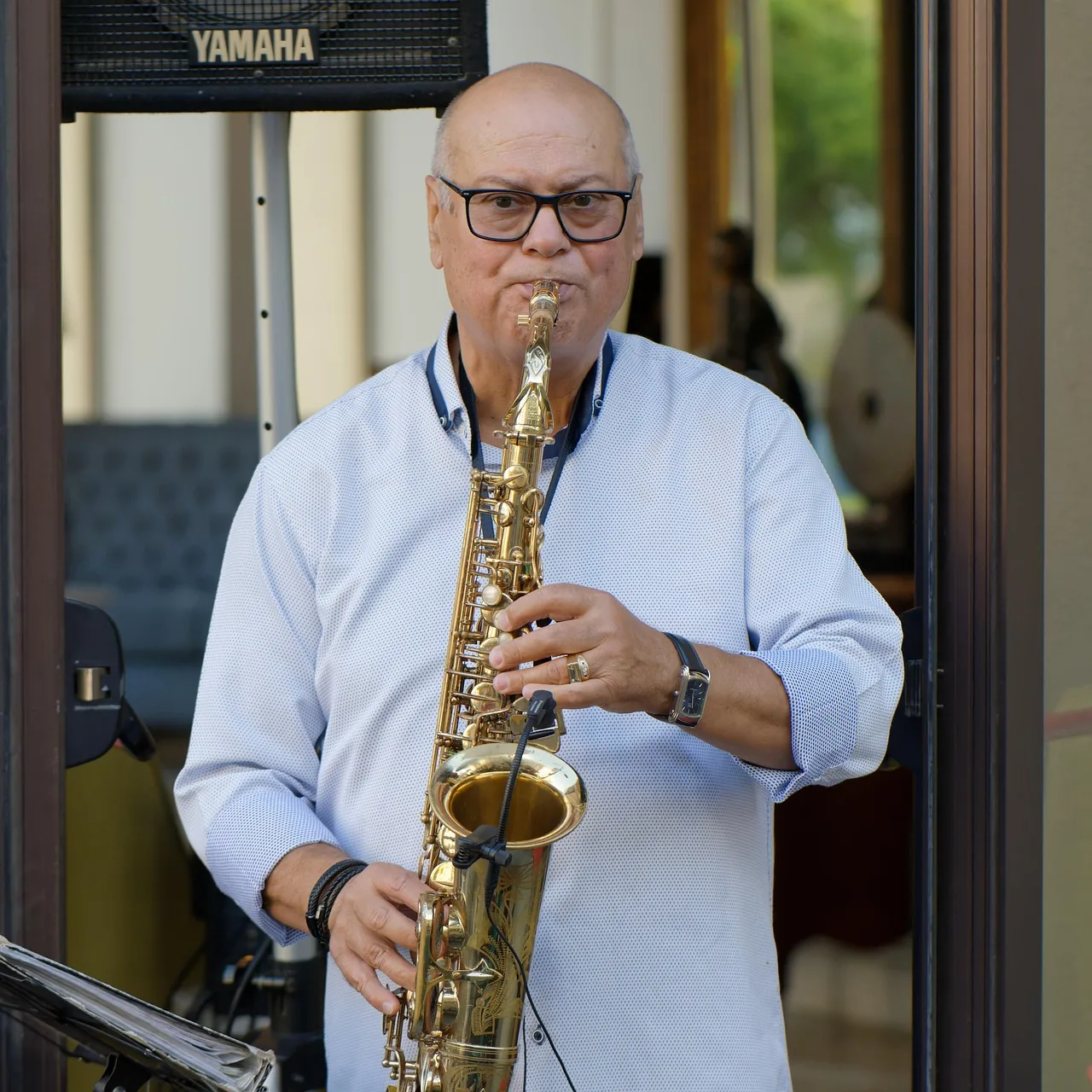
The Mark VII (1974–1980) embodied that response. It introduced a new octave-key mechanism, redesigned left-hand spatula keys and wider keys. A three-point ring connecting the body and bell strengthened the instrument’s acoustic structure. The range covered only alto and tenor saxophones and aimed for a sound rich in upper harmonics, with better projection onstage.
Why the new model did not displace the old one
Many players kept their older instruments because of ingrained playing habits and emotional attachment.
Gérard Badini refers to the idea of an instrument being played in: a new saxophone can initially lack character. The mouthpiece, reed and continued use help shape its voice.
Super Action 80: a return and a step forward
The Super Action 80 (1981–1985) returned to a more compact layout, closer to earlier models, while retaining acoustic advances from the preceding era.
The goal was greater consistency, better pad sealing and a broader response. Its creation followed both industrial and musical aims, seeking a balance between comfort and power.
Advice when choosing: try instruments with your physique, repertoire and playing habits in mind. The best choice depends on how an instrument feels in your hands and sounds when you play it.
“An instrument reveals itself over time; reputation cannot override experience.”
Conclusion
: The model’s longevity comes from a rare balance of design, use and tonal heritage. Over nearly twenty years and across thousands of instruments, famous saxophonists secured its place in the collective memory.
Summary: ergonomics, flexibility, the industrial history linking France and the United States, and adoption by musicians all contribute to the legend. Chronological markers (prototypes, gradual transition and thresholds by instrument family) help distinguish the first instrument shipped from the first one produced.
For buyers, French or American markings, the presence of the ® symbol, the “vertical marking” and a soldered bow are clues that help place an instrument. Final adjustment, the mouthpiece and reeds remain crucial.
Make an informed choice: compare instruments according to how you will use them (studio, stage, classical or jazz), your physique and your tonal goals rather than the myth. Understanding the history can help you play and buy more wisely.