


Starting the saxophone can feel intimidating. A good starting point helps you avoid frustration and make faster progress with breath control, intonation and rhythm.
In this article, you will find a simple way to assess your level. We will also cover the basics of reading music and how to select suitable sheet music based on tempo, range and repetitive structure.
Your choice of pieces should develop skills you can use again: breathing, fingering, articulation and phrasing. Each suggested piece comes with a specific reason for choosing it and a benefit for your learning.
Along the way, you will discover contemporary examples and a variety of styles. By the end, you will know how to keep playing enjoyable while making progress.
For more learning resources and practical guidance, read these practical tips.
Understand your level before choosing alto saxophone sheet music
Before selecting a tune, get a clear sense of your playing level.
Practical benchmarks: complete beginner or returning beginner
Complete beginner: you have been playing for a few weeks or months, your sound is sometimes unsteady, and you know basic fingerings but read music slowly. For two to three minutes, try to produce an even sound and play short phrases without stopping.
Returning beginner: you have some previous experience, read faster and can play longer phrases. You can play a simple scale without hesitation and follow a slow metronome.
What makes a piece easy?
An approachable tune has few accidentals or large interval leaps, a comfortable range, short phrases and repetition. Its steady rhythm lets you work on phrasing and tone production.
Learning goals
Choose according to your goal: work on a melody to improve intonation, a short solo for articulation, or an accompaniment part for rhythmic placement.
| Criterion | Complete beginner | Returning beginner |
|---|---|---|
| Sound consistency (2 to 3 min) | Inconsistent | Steady |
| Music reading | Slow and hesitant | Fluent |
| Suggested goal | 2 basic pieces + 1 challenge | Pieces with short solos |
| When to take lessons | If posture or tone is a problem | To work on style and phrasing |
Reading sheet music: the essentials for playing saxophone
Reading a staff helps you quickly identify the pitches and rhythms to play on your instrument.
The staff, treble clef and note positions
The staff has five lines. Each line and space represents a specific note.
The treble clef (the G clef) marks the position of G and provides a reference point. Tip: the lines are E, G, B, D and F; the spaces are F, A, C and E.
Note values, rests and rhythm: avoiding common mistakes
The shape of a note shows its duration: whole note, half note or quarter note. Rests matter just as much as notes.
A misplaced rest breaks the rhythm, even when the notes are correct.
Before you blow, tap the rhythm and read two measures aloud.
Connecting notes and fingerings: simple ways to progress quickly
Use a chart to connect the position of a note on the staff with its fingering.
- Read in groups of two measures.
- Tap the rhythm, then play it on a single note.
- Practice common note changes until they become automatic.

Short routine: spend five minutes reading rhythms and five minutes reading notes before playing a song. This is the key to learning quickly without frustration.
Beginner alto saxophone sheet music: how to choose the right pieces
The right piece combines a steady tempo with a simple form to make learning easier.
Use these criteria to find a suitable tune from your first week:
- A slow to moderate tempo (80 to 110 bpm).
- Repeated phrases and a verse–chorus structure.
- Few accidentals and a narrow range.
Tempo and repetitive structure
A manageable tempo prevents fingering and breathing mistakes from piling up. Start slowly, then gradually increase the speed.
Range and leaps
Choose a melody centered in a comfortable register. Avoid large leaps that make intonation less secure.
Musical style and motivation
Follow your tastes: jazz for phrasing, pop for catchy melodies, classical music for precision, and film music for easily recognizable tunes.
Sheet music with a backing track
A good backing track helps you work on rhythmic placement and makes practice more musical.
Practical tip: practice without accompaniment first to focus on intonation, then bring the track back to steady the tempo and play through the whole form.
To find quality backing tracks and interactive tools, explore platforms such as Tomplay and read a practical guide to learning resources.
Easy jazz and bossa nova pieces for beginner saxophonists
Jazz and bossa nova are ideal for developing musicality quickly. These styles often feature repetitive forms and lyrical melodies, so you can play musically from your first attempts.
Fly Me to the Moon
Background: Bart Howard wrote this song in 1954, and Frank Sinatra popularized it in 1964. It is a jazz standard with a simple structure.
Practice: play the melody at a slow, steady tempo, then add a light swing feel. Breathe between the short phrases and use gentle attacks.
- Play the melody without exaggerated accents.
- Add a light swing feel.
- Repeat two measures until you can play them confidently.
The Girl From Ipanema
Composed by Antonio Carlos Jobim in 1964, this song embodies bossa nova. Stay relaxed, aim for steady rhythm and keep sustained notes supple.
Listen to several vocal and instrumental versions before playing so you can place the accents without overdoing them.
Honeysuckle Rose
This 1929 Fats Waller standard, created with Andy Razaf, has a memorable melody.
Learn it one short phrase at a time. Then play without the sheet music to free up your expression. A few guided jazz lessons can help you understand its form and phrasing faster.
Pop and soul ballads that are ideal for learning saxophone
Slow pop and soul tunes help you develop steadier tone and breathing.
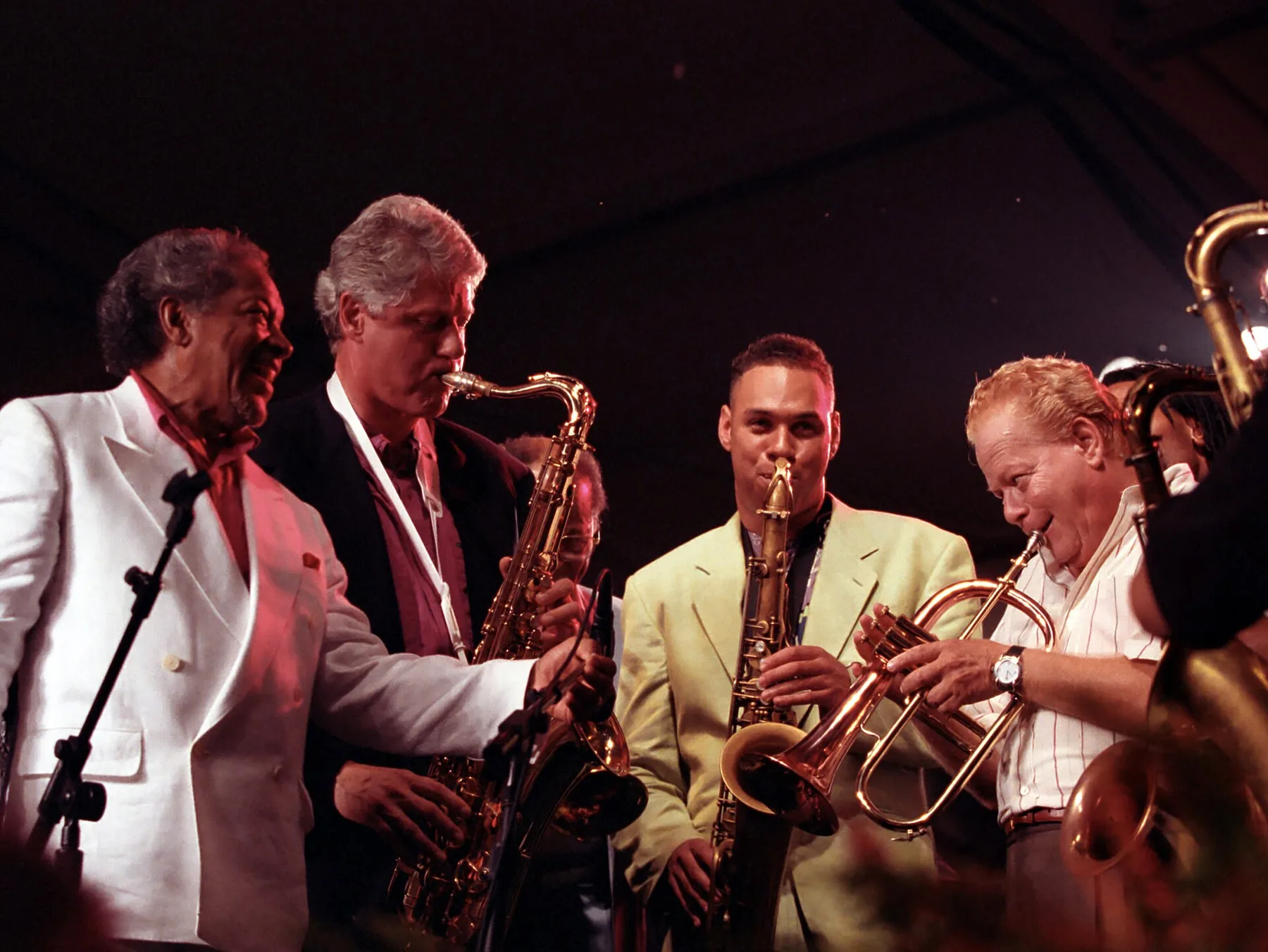
Why these ballads? Their moderate tempos, simple vocal lines and emphasis on intonation support learning. They encourage you to refine tone and phrasing instead of chasing speed.
Careless Whisper
Practice the iconic riff in very short phrases. Break up the line, steady the pitch of each held note and breathe before longer phrases.
Ain’t No Sunshine
The sparse arrangement leaves plenty of space. Imitate the singer to refine your phrasing, and shape the ends of notes for greater expression.
Imagine
Your goal is clean playing, with gentle attacks, an even sustained sound and, if you like, subtle vibrato. Put musicality before speed.
Someone Like You
The simple line helps you develop emotion and nuance. Practice legato, crescendos and diminuendos, and control the dynamics without forcing the volume.
Practical tip: memorize the melody, then play with piano accompaniment or a backing track to organize your breathing. Mark breath points and dynamic intentions on the sheet music.
| Piece | What to practice | Goal |
|---|---|---|
| Careless Whisper | Riff | Breathing and intonation |
| Ain’t No Sunshine | Expression | Vocal phrasing |
| Imagine | Clean playing | Gentle attacks |
| Someone Like You | Nuance | Dynamic control |
For suitable arrangements and accompaniments, see a selection of 1980s songs and interactive sheet music on Tomplay.
Modern and popular songs that keep playing fun
Familiar contemporary songs often help keep playing enjoyable. They make practice more motivating and repetition less tedious.
Happy (Pharrell) has a simple groove and repetitive structure. Work on a steady tempo: repeat four measures very slowly, then gradually speed up. It is an excellent piece for strengthening fingerings, articulation and endurance.
Flowers (Miley Cyrus) is a modern hit that offers an introduction to guided improvisation. Start with the melody, vary the ends of phrases, then improvise with two or three notes while keeping the beat.
Leave the Door Open (Silk Sonic) calls for careful rhythmic placement. Learn to play slightly behind or ahead of the beat, and refine your attacks to capture its R&B style.
No Man, No Cry (Jimmy Sax) shows the sound of contemporary electronic music. Aim for a straight tone and crisp articulation, and manage long held notes with subtle vibrato for a modern touch.
Use a backing track to feel the harmony and play as though you were in a group. A few lessons focused on rhythm or improvisation can speed your progress. For more resources, find practical guides in the general information.
Film music and recognizable themes for faster progress
Film themes offer familiar material for developing musicality.
You often know the melody and story already, which lets you focus on intonation, the notes and the rhythm.
The Pink Panther
Henry Mancini’s instantly recognizable theme has a strong jazz character. Work on crisp attacks and light articulation.
Play with ease so this classic melody sounds natural.
The Godfather
The Godfather theme is a useful piece for developing musicality.
Focus on controlling vibrato, shaping phrase endings and managing your breath.
Pirates of the Caribbean — He’s a Pirate
This piece requires energy and precision. Its tempo is brisk and its articulation is quick.
Practice in short sections, then gradually increase the speed.
Mark your breaths and difficult fingerings on the sheet music, then repeat the key passages.
- Isolate two to four difficult measures.
- Repeat them slowly with a backing track.
- Increase the tempo once you can play the passage confidently.
| Theme | What to practice | Benefit |
|---|---|---|
| The Pink Panther | Articulation, swing | An immediate feel for jazz |
| The Godfather | Expression, breathing | Vibrato control |
| He’s a Pirate | Energy, precision | Endurance and rhythmic placement |
Conclusion
A three-step plan: assess your level, strengthen your music-reading basics, then choose sheet music with a suitable tempo, range and structure.
For a 30-day program, practice one very easy piece to build confidence, a pop or film tune you enjoy to develop consistency, and a slow jazz standard for phrasing. Alternate between them each week.
Practice for 15 to 20 minutes a day. Record audio or video of yourself so you can hear your progress in intonation, tone consistency and articulation.
If you remain stuck, take a few lessons focused on posture, tone and rhythm. Now choose a song from our lists, open the sheet music, slow the tempo and play the first phrase until you can play it confidently.
Practical resources and exercises: basics and exercises.