

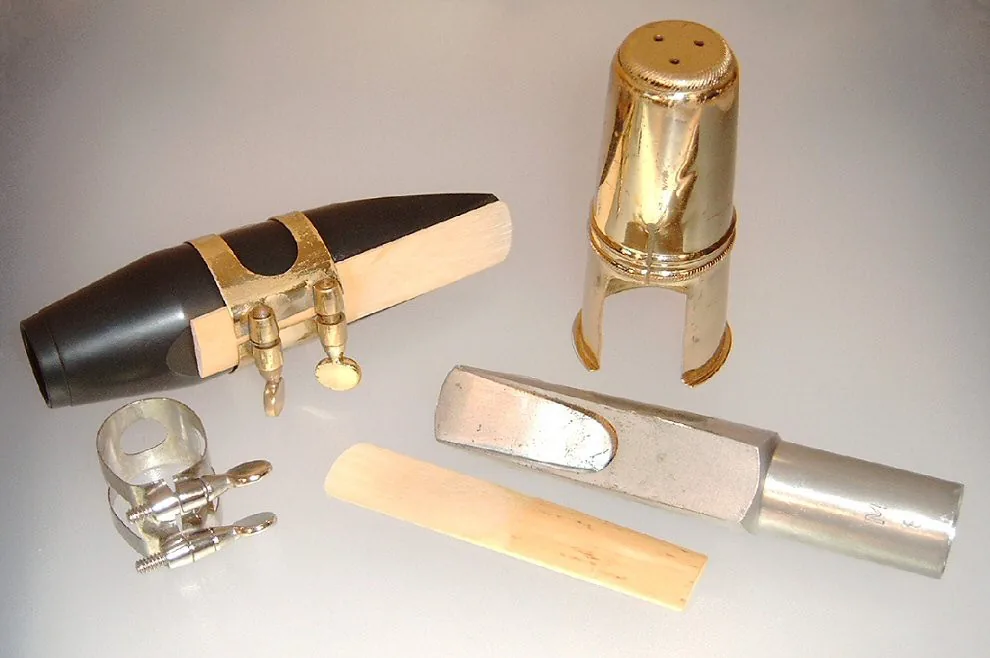
Alto saxophone mouthpiece
A practical guide for any musician who wants to change their tone and play more comfortably without changing instruments. The mouthpiece is the essential interface where sound begins. Working on this component is often the quickest way to improve response, projection and ease of playing.
We will explain the key concepts: tip opening, table, chamber and baffle. These areas influence reed vibration and directly affect how the mouthpiece feels.
This article takes into account that specifications and measurement scales vary by brand. Finishing processes can create noticeable differences between individual mouthpieces.
Goal: measure the tip opening, interpret the figures, adjust the reed and check compatibility with your saxophone. The choice is personal: it depends on the player’s anatomy, style and playing context.
To learn more about modern materials and shapes, see this useful resource: technical guide and comparison.
Understanding the alto saxophone mouthpiece: adjustments and playing feel
The front section that holds the reed directly affects tone, resistance and projection. On an instrument, this component shapes sound production: it determines how the reed starts vibrating, sustains that vibration and turns airflow into sound.
Why this component matters
It sets the balance between ease and control. The tip opening determines the reed’s range of vibration. The table supports and stabilizes the reed. The chamber defines the resonating space. The baffle shapes the inner profile that guides the air column.
Small differences, big effects
Small differences in dimensions or finish change roundness, intonation and perceived resistance. Two mouthpieces sold as identical may perform differently because of differences in rail symmetry or machining precision.
What to inspect before playing
- Check that the table is even and the rails are symmetrical.
- Estimate the chamber size and inspect the baffle to see its inner profile.
- Remember that the choice is personal: the saxophonist’s anatomy and sound goals matter.
| Area | Role | Effect on sound | What to inspect visually |
|---|---|---|---|
| Tip opening | Range of vibration | Volume, ease of playing | Gap at the tip |
| Table | Reed support | Stability, attack | Flatness, wear |
| Chamber & baffle | Sound volume and direction | Tone, tonal color | Inner profile, symmetry |
For an objective comparison, start by measuring the tip opening — while allowing for differences between brands.
Measuring and interpreting the tip opening on an alto saxophone mouthpiece
A simple tip-opening measurement lets you compare several mouthpieces objectively. The tip opening is the distance between the reed and the tip of the mouthpiece. To see it, place the mouthpiece flat on a table: the gap is immediately visible.
Practical reference points: for alto saxophone, a common range is 1.40 to 2.80 mm (0.055 to 0.110 inches). Some brands, such as Berg Larsen, Bari and Ponzol, state measurements directly in thousandths of an inch (90, 95, 100, 110).
Watch out for different scales: the same number from two manufacturers can indicate different openings. For example, a Meyer 7 measures about 2.05 mm, compared with about 2.30 mm for an Otto Link 7. This example shows why you should compare measurements, not just model numbers.
Tolerances and finishing matter: a difference of 0.1 mm changes resistance, volume and control. Instead of aiming for the widest opening, find the range in which you can play comfortably, accurately and for a long time.
For standardized measurements and technical references, consult the standard measurements, and consider the reed, facing length and chamber when refining your choice.
Adjusting the reed for a better playing feel
Systematically trying different reed and mouthpiece combinations remains the most reliable way to find your playing balance. Start with one mouthpiece, then vary the reed’s strength and cut. Note the differences in stability, intonation and projection.
Pairing reed and mouthpiece: matching the reed to the mouthpiece design
Match the reed to the mouthpiece’s geometry, rather than the other way around. A good pairing improves attack and stability without straining your embouchure.
Balancing resistance and ease
Aim for enough resistance to stabilize intonation and give you dynamic range without causing fatigue.
Tip opening, table, chamber and baffle
The wider the tip opening, the more important it is to choose a suitable reed to retain control and flexibility.
A long facing produces a rounder sound; a short facing encourages a crisp attack. The chamber and baffle determine density and brightness.
Mouthpiece and neck compatibility, and materials
Check intonation on low notes, the third and high notes. A poor pairing can seem like a problem with the instrument.
Materials: metal for strength, hard rubber for comfort, and modern polymers for durability. Geometry remains the most important factor.
- Define your sound goal.
- Try several reeds of different strengths and cuts on the same mouthpiece.
- Confirm that resistance is manageable and projection is good.
- Compare individual mouthpieces and check that the mouthpiece, reed and instrument work well together.
| Parameter | Main effect | What to test | Action |
|---|---|---|---|
| Tip opening | Volume and control | High register, power | Change reed strength |
| Facing length | Roundness and attack | Legato and staccato | Try a short facing, then a long one |
| Chamber & baffle | Density and brightness | Focus, tonal color | Try different models |
| Material | Comfort and durability | Temperature, wear | Choose according to use |
For technical references on standard measurements, see Vando® measurements.
Conclusion
Ultimately, look for a measurable balance that preserves your stamina and supports musical expression.
On a saxophone, optimizing a mouthpiece means identifying its geometry, interpreting the tip opening in the manufacturer’s stated units, then adjusting the reed to check that the whole setup works with the instrument.
Do not aim for an extreme. Choose the setup that provides control, accurate intonation and little fatigue. Record your current tip opening, try two or three reed strengths around the one that works, then note your observations on attack, roundness, projection and fatigue.
If two models seem similar, choose the one that remains comfortable over time and gives you a reliable attack. For practical advice about reeds, see these reed tips.
Final thought: the right mouthpiece helps the player stay comfortable and play freely.