

The fugue, a pillar of classical music, represents a peak of contrapuntal complexity and discipline. Related to the Latin fugere, this musical form evolved to occupy a major place in the history of composition.
Considered one of the most demanding forms, the fugue rests on counterpoint, in which several voices intertwine in a structured way. Johann Sebastian Bach, a master of the genre, raised the fugue to the level of a universal art.
Through works such as The Art of Fugue, Bach explored the seemingly endless possibilities of this form, leaving a legacy that inspired generations of composers. More than a technique, the fugue is a profound expression of musical architecture.
Introduction to the guide to fugues
Discover the principles of the fugue, a musical form known for its discipline and complexity. This guide introduces its foundations and development.
The beginning of a fugue is crucial because this is where the subject is introduced. This subject, often brief, is repeated and imitated by different voices, creating a rich, structured texture. Imitation is a key element because it allows the theme to develop coherently.
From the first bar, the theme and answer intertwine, laying the foundation for the work. This opening structure establishes the timing and style used throughout the fugue. The subject, central to the composition, is often repeated and transformed, demonstrating the composer’s skill.
The fugue’s parts work together to create stylistic unity. This coherence ensures that each element contributes to the work as a whole. As one expert puts it,
“The fugue is a true school of style and discipline, where every note matters.”
Finally, the fugue’s style varies from composer to composer, but its essence remains the same: a pursuit of contrapuntal perfection. Whether you are a beginner or a knowledgeable listener, this guide will reveal the workings of this fascinating musical form.
Origins and historical development of the fugue
The fugue, a musical form with a rich history, has roots in the early seventeenth century. Growing out of the ricercar and the motet, it developed under the influence of composers such as Palestrina.
The birth of the fugue in the seventeenth century
At this time, the fugue emerged as a distinct form, moving away from modal structures toward tonal writing. Composers explored imitation and counterpoint, laying the groundwork for a complex musical texture.
The subject, a brief and memorable theme, became the foundation of the form. Composers of the period, including Dieterich Buxtehude, established its basic conventions and prepared the way for future generations.
The influence of Palestrina and the motet
Palestrina, a master of the motet, profoundly influenced the fugue’s development. His use of counterpoint and imitation encouraged composers to explore new approaches.
The shift from modal to tonal writing marked a turning point. Although the earliest fugues were simple, they already showed command of counterpoint and anticipated later complexities.
Thanks to these innovations, the fugue became a pillar of classical music, symbolizing both discipline and creativity.
Why the fugue matters in classical music
With its disciplined structure, the fugue occupies a central place in music history. It presents a technical and artistic challenge in which every note has a role.
The subject and answer form the heart of the fugue. From the first bar, they intertwine to create a complex musical texture. Bach and his predecessors used this approach to explore the possibilities of counterpoint.
The notes that shape the work’s design show exceptional skill. Every element, from subject to answer, contributes to the work as a whole and illustrates the discipline of musical writing.
Great masters such as Bach showed how each element of a fugue fits into the whole. An analysis of their works reveals a coherent musical architecture in which imitation and counterpoint strengthen expression.
By studying these notes and the way they are organized, we discover the value of analysis for understanding the art of fugue. It offers a distinctive view of how composers mastered the genre.
The fundamental characteristics of a fugue
The fugue is distinguished by a disciplined structure that combines a subject, an answer, and several voices in counterpoint. Each element contributes to the work as a whole and shows the composer’s skill.
The fugue’s parts work together to create stylistic unity. This coherence ensures that each element contributes to the entire work.
Fugal writing is distinguished by the discipline of its musical lines. The voices, often numbering between two and five, intertwine in a structured way to create a rich polyphonic texture.
As one expert puts it,
“The fugue is a true school of style and discipline, where every note matters.”
The relationships between the voices and their contributions to the polyphony are crucial. Each voice adds a distinct dimension that strengthens the musical expression.
The role of subject and countersubject in composition
The subject, the fugue’s principal theme, is the central element of this musical form. It is a brief, memorable motif that recurs and changes throughout the composition. One voice introduces the subject, and the others then imitate it, creating a rich, structured polyphonic texture.
Definition and function of the subject
The subject is often stated in the home key and provides the basis for the entire work. It must be distinctive enough to remain recognizable whenever it appears. In Bach’s fugues, the subject is sometimes transformed, demonstrating the composer’s skill.
The power of invertible counterpoint
Invertible counterpoint, in which the subject and countersubject can exchange positions, demonstrates exceptional technical skill. Common in fugues, this device adds complexity and interest to the composition.
| Element | Function | Example |
|---|---|---|
| Subject | Main theme | Initial statement in the home key |
| Countersubject | Accompaniment | Combined with the subject |
| Invertible counterpoint | Complexity | Exchange of subject and countersubject |
The subject and countersubject work together to create stylistic unity. This coherence ensures that each element contributes to the entire work. Bach illustrated this relationship brilliantly in pieces such as The Art of Fugue.
The structure of a fugue’s exposition
The exposition is the opening phase of a fugue, during which each part introduces the subject through imitation. This stage is crucial because it establishes the work’s style and structure.
The subject passes through the different parts, creating a rich musical texture. The voices, often numbering between two and five, intertwine in a structured way and strengthen the musical expression.
At this stage, the writing is characterized by discipline and coherence. The entries and reappearances of the subject are essential: they shape the polyphony and overall harmony.
| Element | Function | Example |
|---|---|---|
| Subject | Main theme | Initial statement in the home key |
| Canon | Structured imitation | Successive entries of the parts |
| Part | Voice | Between two and five voices |
Technical examples from classical works, including Bach’s fugues, illustrate this structure. Through its discipline, the exposition provides a solid foundation for the rest of the work.
Techniques of imitation and the use of canon
Imitation and canon are essential elements in composing a fugue. These techniques structure the main theme by repeating and transforming it coherently.
Principles of imitation and stretto
Imitation involves repeating a motif in different voices. A canon uses imitation particularly strictly: each voice takes up the theme at a set interval. Stretto, an advanced technique, brings the subject entries closer together, creating intense musical tension.
Stretto is often used in Bach’s fugues to heighten musical expression. In The Art of Fugue, for example, Bach uses this technique to explore contrapuntal possibilities.
These techniques allow movement from one statement of a theme to another. Counterpoint, a key term here, describes the interweaving of voices. This way of composing displays the composer’s skill.
Specific examples from Bach’s work illustrate these principles. His use of canon and imitation remains a point of reference for composers.
Forms and variants of the fugue
Although associated with a disciplined structure, the fugue takes several forms, each offering a different perspective on the genre. From the simplest to the most complex, these variants illustrate the richness and depth of contrapuntal writing.
The fughetta: a simplified version
The fughetta, or little fugue, has a simplified structure. Often used for teaching, it has fewer voices, commonly two or three, and a brief subject. This form helps beginners master the basics of counterpoint without the complexity of a full fugue.
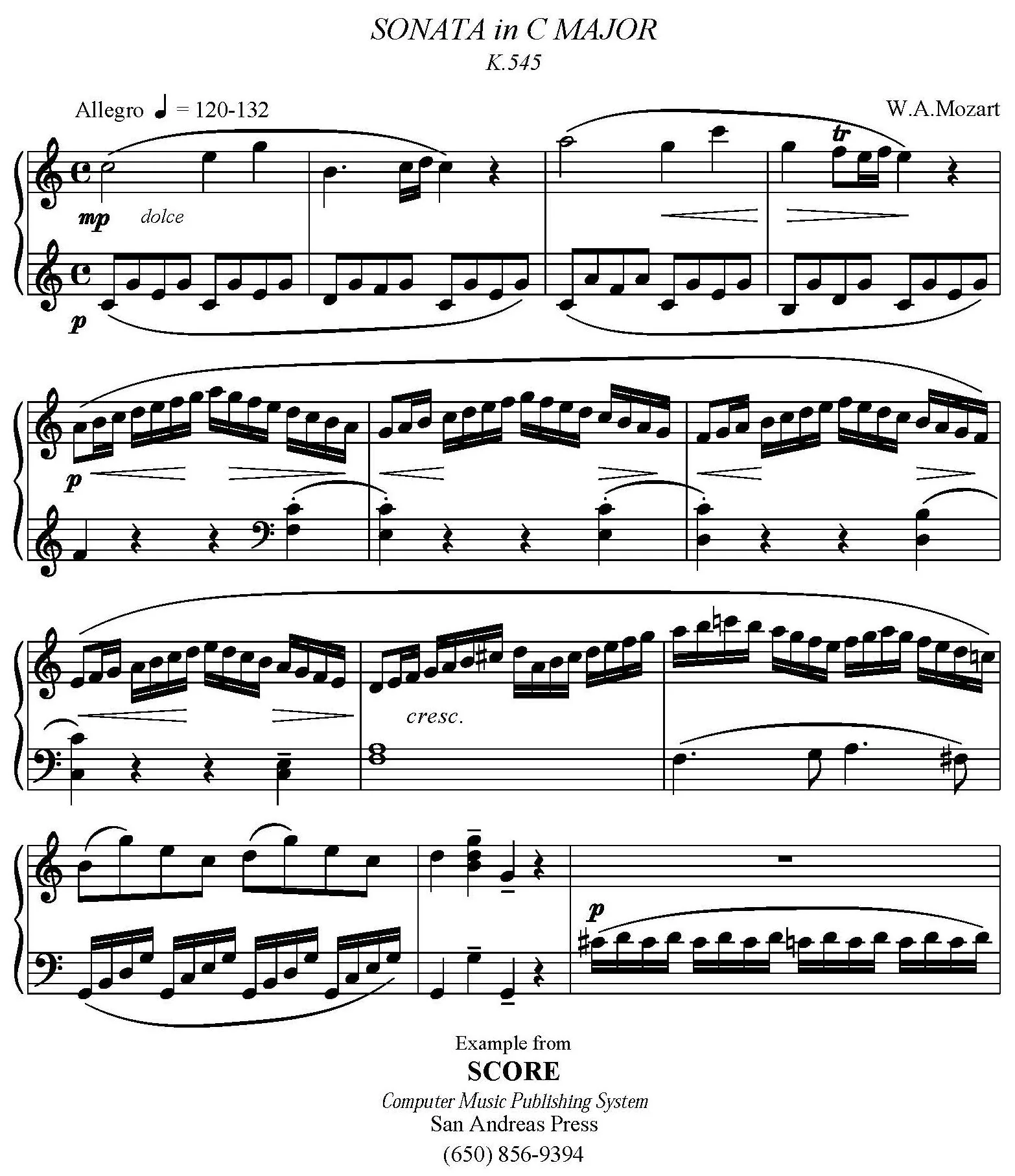
The subject remains central even in this simplified version. It is repeated and transformed, helping develop skills in imitation and canon. Though less complex, the fughetta follows the fugue’s basic principles and offers a gradual introduction to the genre’s challenges.
Fugato and double fugue
A fugato is a passage that incorporates fugal elements into a larger composition. It features freer imitation of the subject without the structure of a complete fugue. A double fugue, meanwhile, combines two subjects, increasing complexity and richness of sound.
With its two interwoven subjects, the double fugue displays the composer’s skill. Each distinct but complementary subject contributes to a dense polyphonic texture. A fugato uses imitation more flexibly and places fugal motifs within a freer structure.
These variants, from fughetta to fugato and double fugue, offer a range of teaching and artistic approaches. They allow composers and performers to explore different aspects of counterpoint, enriching the classical repertoire.
Technical skill and contrapuntal discipline
Technical command of counterpoint is essential to composing a fugue. Composers must write with great discipline to create coherent, harmonious works. This technical demand appears in the careful use of the subject and answer, key elements of fugal structure.
Writing techniques such as imitation and stretto allow complex development of the subject. In Bach’s The Art of Fugue, for example, invertible counterpoint adds another dimension to the composition. These techniques require thorough command of musical writing.
The instrument plays a crucial role in bringing out this discipline. The parts, often numbering between two and five voices, intertwine in a structured way to create a rich polyphonic texture. The endings of major fugues, including Bach’s, illustrate this technical skill.
In conclusion, command of counterpoint and technical discipline are pillars of the fugue. Through careful writing and coherent style, composers create works of great complexity and lasting beauty. To explore this analysis further, see this study of the development of counterpoint.
Musical architecture and structural coherence
The musical architecture of a fugue is carefully built: each melodic line has its place within a coherent whole. Although complex, this structure rests on clear principles that guide the listener through the musical design.
The melodic lines, often numbering between two and five voices, intertwine in a balanced way. Each voice, with its own element, contributes to the whole. The work’s design sustains the listener’s interest through a balance of complexity and clarity.
The art of combining these voices and elements depends on mastery of canon and counterpoint. Through careful work, the composer integrates each element into a harmonious whole. This discipline, typical of the fugue, reflects a strong command of the musical art.
In conclusion, a fugue’s musical architecture and structural coherence result from a carefully developed design. Every line, every element, and every voice helps create a work of great beauty and lasting interest.
The fugue in the work of Johann Sebastian Bach
Johann Sebastian Bach represents a high point in the art of fugue and left an enduring mark on classical music. His rich, complex work offers an extensive exploration of counterpoint and established models that influenced later composers.
The Well-Tempered Clavier and its models
The Well-Tempered Clavier offers clear examples of fugal exposition. Bach presents the subjects with the clarity and discipline characteristic of his style. Written for keyboard, the collection displays his mastery of the genre.
The use of organ and keyboard
Bach used the organ and keyboard to explore the fugue’s sonic possibilities. His combination of technique and expression appears in works such as The Art of Fugue and The Musical Offering.
How Bach treats the subject
The subject, the central theme of his fugues, receives remarkably varied treatment. Bach transforms it and combines it with complex counterpoint, demonstrating his artistic skill.
The importance of The Art of Fugue and the chorale
The Art of Fugue is a high point of Bach’s work and demonstrates his command of counterpoint. His chorales add a spiritual dimension that enriches his music.
| Work | Characteristic | Example |
|---|---|---|
| The Well-Tempered Clavier | Fugal exposition | Structured presentation |
| The Art of Fugue | Command of counterpoint | Use of transformed subjects |
| The Musical Offering | Complexity of sound | Exploration of instruments |
Through his compositions, Bach raised the fugue to the level of a universal art, leaving a legacy that still inspires musicians today.
Influence on Classical and Romantic composers
The fugue’s impact on music history extends well beyond its association with Bach. Inspired by him, Classical and Romantic composers incorporated fugal elements into their works, carrying his legacy forward.
Composers such as Mozart and Beethoven drew on fugal structures to enrich their compositions. Mozart, for example, includes fugal passages in his Requiem, while Beethoven explores complex contrapuntal forms in his Hammerklavier Sonata.
Romantic composers such as Mendelssohn and Wagner were also influenced by Bach. Mendelssohn incorporated fugal elements into his church symphonies, while Wagner used contrapuntal motifs less directly in his operas.
| Composer | Work | Influence |
|---|---|---|
| Mozart | Requiem | Inclusion of fugal passages |
| Beethoven | Hammerklavier Sonata | Exploration of counterpoint |
| Mendelssohn | Church symphonies | Use of fugal structures |
| Wagner | Operas | Contrapuntal elements |
Drawing inspiration from Bach, these composers preserved the fugue and adapted it to their own styles, demonstrating the form’s flexibility and depth.
The fugue as a discipline in music education
The fugue has an important place in music education, particularly at the Paris Conservatoire. Although complex, the genre is considered valuable for developing musicians’ skills.
Fugue exercises improve instrumental skill and strengthen compositional ability. Composers and organists especially benefit from this discipline, which teaches them musical structure and careful writing.
| Exercise | Description | Teaching goal |
|---|---|---|
| Fughetta | Simplified version of a fugue | Introduction to the basics of counterpoint |
| Stretto | Closely spaced entries of the subject | Increase musical complexity |
| Invertible counterpoint | Exchange of subject and countersubject | Demonstrate technical skill |
Regular practice of these exercises helps students understand musical architecture and structural coherence. Once they have learned the theoretical basics, the exercises become an essential tool for deepening their knowledge.
Interest in this teaching remains steady because the fugue continues to train capable musicians. Every day, new students discover the benefits of the discipline.
To learn more about the fugue’s development, see this study.
Innovations and modern approaches to the fugue in the twentieth century
In the twentieth century, the fugue developed through innovations by Max Reger, Richard Strauss, and Arnold Schoenberg. These composers explored new stylistic and technical possibilities, reshaping fugal writing.
Max Reger, for example, combined complex harmonies and bold contrapuntal structures while retaining some traditional discipline. Richard Strauss incorporated fugal elements into orchestral works, creating powerful dramatic effects. Schoenberg, through his twelve-tone approach, extended the possibilities of fugal writing with new levels of complexity.
| Composer | Contribution | Technique |
|---|---|---|
| Max Reger | Complex harmonies | Invertible counterpoint |
| Richard Strauss | Orchestral integration | Free imitation |
| Arnold Schoenberg | Twelve-tone composition | Musical tone row |
These innovations transformed musical writing and offered listeners a rich, engaging experience. The keyboard, often used as a principal instrument, helped bring out these new approaches and strengthen artistic expression. These developments show how modern ideas influenced fugal style and opened new paths for the form.
To learn more about these innovations, see this analysis of the fugue’s development.
The fugue in teaching theory and practice
The fugue has an important place in music education, particularly at the Paris Conservatoire. Although complex, the genre is considered valuable for developing musicians’ skills. Fugue exercises improve instrumental skill and strengthen compositional ability.
Composers and organists especially benefit from this discipline because it teaches careful writing and musical structure. Teaching texts emphasize the importance of disciplined fugal writing, based on the rules of counterpoint and imitation, in both theoretical and practical training.
The fugue is included in music theory courses to teach the basics of composition. Careful writing is essential to mastering the subject and developing a composition. The subject, the fugue’s main theme, is central to this learning process.
Exercises involving episodes and sonatas can help students refine their skills. For example, simplified fugue exercises such as the fughetta suit beginners. These structured exercises help students master the basics of counterpoint.
The topics covered in teaching help structure musical practice. Historical and modern teaching works, including those of Bach, provide valuable references for studying the fugue.
Conclusion
The fugue brings together the principles of counterpoint, a rich history, and the influence of great composers, from Bach to modern innovators. Each section of this article has explored the foundations and development of the form, highlighting its historical and artistic importance.
The subject, the fugue’s central theme, is repeated and transformed throughout the work, demonstrating the composer’s skill. The answer and the transitions between parts contribute to a harmonious structure in which every voice intertwines in a coherent way. The terminology and style used reinforce this unity.
The number of elements that characterize the fugue makes it both a disciplined and an inspiring art. From earlier composers such as Bach to modern ones such as Schoenberg, musicians have brought this discipline to a high level of achievement. To rediscover it, follow its development from the earliest fugues to today’s innovations.
Ultimately, the fugue remains a profound expression of musical architecture in which every point and every element contributes to a work of lasting beauty. Its legacy continues to captivate listeners, offering rich enjoyment and a lasting source of inspiration.
FAQ
Why is the fugue important in classical music?
How does a fugue differ from a sonata?
What is an exposition in a fugue?
What is the difference between a subject and a countersubject?
What is stretto in a fugue?
How did the fugue influence Classical composers?
What is a fughetta?
What role does the organ play in fugues?
How did the fugue develop in the twentieth century?
Why is the fugue taught as a discipline in music education?
Source links
- https://en.wikipedia.org/wiki/Fugue
- https://en.wikipedia.org/wiki/Fugue
- https://en.wikipedia.org/wiki/The_Art_of_Fugue
- https://en.wikipedia.org/wiki/The_Well-Tempered_Clavier
- https://en.wikipedia.org/wiki/Classical_music
- https://en.wikipedia.org/wiki/Fugue
- https://en.wikipedia.org/wiki/Glenn_Gould
- https://en.wikipedia.org/wiki/The_Well-Tempered_Clavier
- https://en.wikipedia.org/wiki/The_Art_of_Fugue
- https://en.wikipedia.org/wiki/Fugue
- https://www.chambermusicsociety.org/about-the-music/compositions/bach-musical-offering
- https://en.wikipedia.org/wiki/Loop_(music)
- https://en.wikipedia.org/wiki/Fugue
- https://en.wikipedia.org/wiki/Fugue
- https://journals.openedition.org/transposition/418?lang=en
- https://en.wikipedia.org/wiki/Opera
- https://en.wikipedia.org/wiki/Imitation_(music)
- https://en.wikipedia.org/wiki/Fugue
- https://en.wikipedia.org/wiki/Counterpoint
- https://en.wikipedia.org/wiki/Counterpoint
- https://en.wikipedia.org/wiki/Baroque_music
- https://en.wikipedia.org/wiki/Fugue
- https://en.wikipedia.org/wiki/The_Art_of_Fugue
- https://en.wikipedia.org/wiki/Johann_Sebastian_Bach
- https://en.wikipedia.org/wiki/Classical_music
- https://en.wikipedia.org/wiki/Music
- https://en.wikipedia.org/wiki/The_Art_of_Fugue
- https://en.wikipedia.org/wiki/The_Art_of_Fugue
- https://en.wikipedia.org/wiki/Classical_period_(music)
- https://fr.wikipedia.org/wiki/Histoire_de_la_musique_classique_occidentale
- https://en.wikipedia.org/wiki/Classical_music
- https://en.wikipedia.org/wiki/Johann_Sebastian_Bach
- https://en.wikipedia.org/wiki/Johann_Sebastian_Bach
- https://en.wikipedia.org/wiki/Fugue
- https://en.wikipedia.org/wiki/Fugue
- https://en.wikipedia.org/wiki/Conservatoire_de_Paris
- https://en.wikipedia.org/wiki/Fugue
- https://en.wikipedia.org/wiki/Fugue