


Goal: this buying guide helps beginners choose a suitable instrument and avoid costly mistakes, such as buying a poorly adjusted model or one that is uncomfortable to hold.
Quick background: patented in 1846 by Adolphe Sax, the saxophone is a single-reed instrument in the woodwind family. Its sound comes from the reed vibrating against the mouthpiece and setting the air column in motion.
Short answer: for most beginners, the E-flat alto is the easiest and most versatile choice for a first saxophone. We will then look at the technical criteria and exceptions based on age, build and musical style.
Practical concerns for beginners include producing a sound (reed and embouchure), comfort, intonation, durability and the true cost (instrument, accessories and maintenance).
The rest of this article covers saxophone types, technical checks, musical use, budget and buying options in France, brands, mouthpieces, reeds and accessories.
Common mistakes: choosing a soprano too soon, overlooking the mouthpiece and reeds, buying used without an inspection, and ignoring the strap and playing posture.
Progress: a well-adjusted student model is better than a shiny instrument that is unstable or tiring to play.
Understand the types of saxophone and choose the easiest one to start with
The instrument’s range and shape affect comfort and sound from the first lessons.
Family and order: from highest to lowest, there are the E-flat sopranino, B-flat soprano, E-flat alto, B-flat tenor, E-flat baritone, B-flat bass and E-flat contrabass. The soprano, alto, tenor and baritone are the most commonly studied.
Why the E-flat alto is often recommended
Practical advantages: the alto offers an excellent balance of weight and size. Its fingerings are standard, its range is versatile, and it is widely taught in music schools and conservatories.
In short: for most beginners, the E-flat alto combines ease of playing with an extensive repertoire, reducing early frustration.
Soprano, tenor and baritone: key differences
- Soprano: more demanding in terms of intonation and air control; often straight or curved.
- Tenor: requires more air and is especially popular in jazz for its presence and warm tone.
- Baritone: heavy and low-pitched; requires a strap or harness, as well as more planning and a larger budget.
The same written note has a distinct tone on each model. That change in sound can affect how much you enjoy playing in the first few weeks.
Children and introductory alternatives
For smaller players, prioritize ergonomics: key reach, the distance between keys and manageable weight. Some student models have closely spaced keys and suitable adjustments.
A playful option: the ABS Nuvo jSax can provide a first experience if a child’s size, teeth or ability to hold a metal alto present a problem.
“If possible, try the instrument while standing with a strap: check that your posture feels natural and your hands reach every key without strain.”
For more on teaching and historical considerations, consult this guide to choosing an instrument.
Which saxophone should you start with? Criteria and mistakes to avoid
An instrument that responds quickly prevents frustration and helps beginners keep playing. An “easy response” means the note sounds immediately, without forcing it. This is the most important criterion for staying motivated at the start.
Assess the mechanism and keywork
Test how smoothly the keys move: they should return promptly, without sideways play. Look for healthy resistance under your fingers; the keys should feel neither spongy nor too stiff.
Hand and body ergonomics
Quick checklist:
- Comfortable position of the thumb rest.
- Keys within easy reach of every finger.
- Balance with the strap: the instrument should remain stable when you loosen your grip slightly.
Intonation and consistency across notes
In the shop, play a slow scale and listen for differences between the low, middle and high registers. Check that no note jumps unexpectedly or loses its sound.
A simple intonation test: use a tuner. On an alto, compare F-sharp and C while adjusting the mouthpiece’s position on the cork.
Finish, assembly and case
Visual signs of quality include rounded edges, centered pads, clean screws and, sometimes, pearl-style key touches. The lacquer does not affect the sound.
The case matters to the overall value: a rigid shell, secure internal padding and sturdy fasteners protect your purchase over time.
| Criterion | What to look for | Warning signs | Recommended action |
|---|---|---|---|
| Response | Easy sound production without excessive effort | Notes that are slow to speak | Try several mouthpieces and reeds |
| Mechanism | Smooth keys and consistent spring action | Sideways play or spongy keys | Ask a repair technician to adjust it |
| Ergonomics | Well-placed thumb rest and easy key access | Hand strain or a hunched posture | Try other models |
| Finish and case | Rounded edges and a rigid case | Sharp edges or a flimsy case | Decline the instrument or negotiate cleaning or servicing |
“Choose a well-adjusted student instrument over a shiny model that is tiring to play: your progress depends on it.”
For a fuller guide to making your first choice, see this useful article: buying guide for a first instrument.
Define your musical goals and learning path
Your intended style shapes the tone, power and playing feel you need. Classical playing favors accurate intonation and a gentle sound. In a marching or concert band, projection and durability matter greatly. Jazz calls for greater flexibility and expression.

Classical, marching band or jazz: how does it affect your choice?
Chamber or orchestral music calls for an even sound. A marching band needs a model that can project its notes outdoors. Jazz prizes individual tone colors, often developed through the mouthpiece and the player’s technique.
With or without music theory: the effect on learning
You can start without knowing how to read music. Learning music theory, however, makes reading notation, practicing independently and playing with other musicians easier.
Posture, breath and air column
Keep your back straight and your neck aligned. Breathe from your abdomen to support your sound over the years. Choose an ergonomic student instrument with accessible keys that makes breathing and playing easier.
“An instrument that makes sound production easier lets you focus on breathing and musicality.”
| Use | Main requirement | Advice |
|---|---|---|
| Classical | Intonation and consistency | Choose a stable model and an easy-to-control mouthpiece |
| Marching and concert band | Projection and durability | Choose a sturdy instrument and a comfortable strap |
| Jazz and contemporary music | Flexibility and tone color | Experiment with mouthpieces and reeds to shape your sound |
If you want teaching advice on learning an instrument, this guide adds useful context.
Budget and buying options in France: new, used or rented
Before buying, set your budget. This makes it easier to choose between buying new, renting and buying used, and helps avoid disappointment.
Typical prices in France: a student alto generally costs between €450 and €1,100. A student tenor is more likely to cost between €800 and €1,500.
Entry level: €250 to €500 — useful for trying the instrument, but tuning stability and keywork may be limited.
Good student model: €1,000 to €3,000 — better intonation, greater durability and stronger resale value.
When to upgrade
Consider upgrading if you play several times a week, practice for long periods or find that intonation is holding you back.
Renting: a flexible option
Renting lets you try an adjusted instrument without a large initial expense. It is useful if your needs may change.
Buying used: essential checks
- Check the pads and look for leaks.
- Test the mechanism for play or misaligned keys.
- Inspect the cork and the condition of the case.
- Try the instrument with a tuner.
“A cheap instrument that is poorly adjusted may cost more after servicing.”
Allow for additional expenses: reeds, a strap, a maintenance kit and possible servicing. These costs affect what you really spend in the first few years.
Brands and models to consider as a beginner
A good brand often provides access to after-sales support and spare parts.
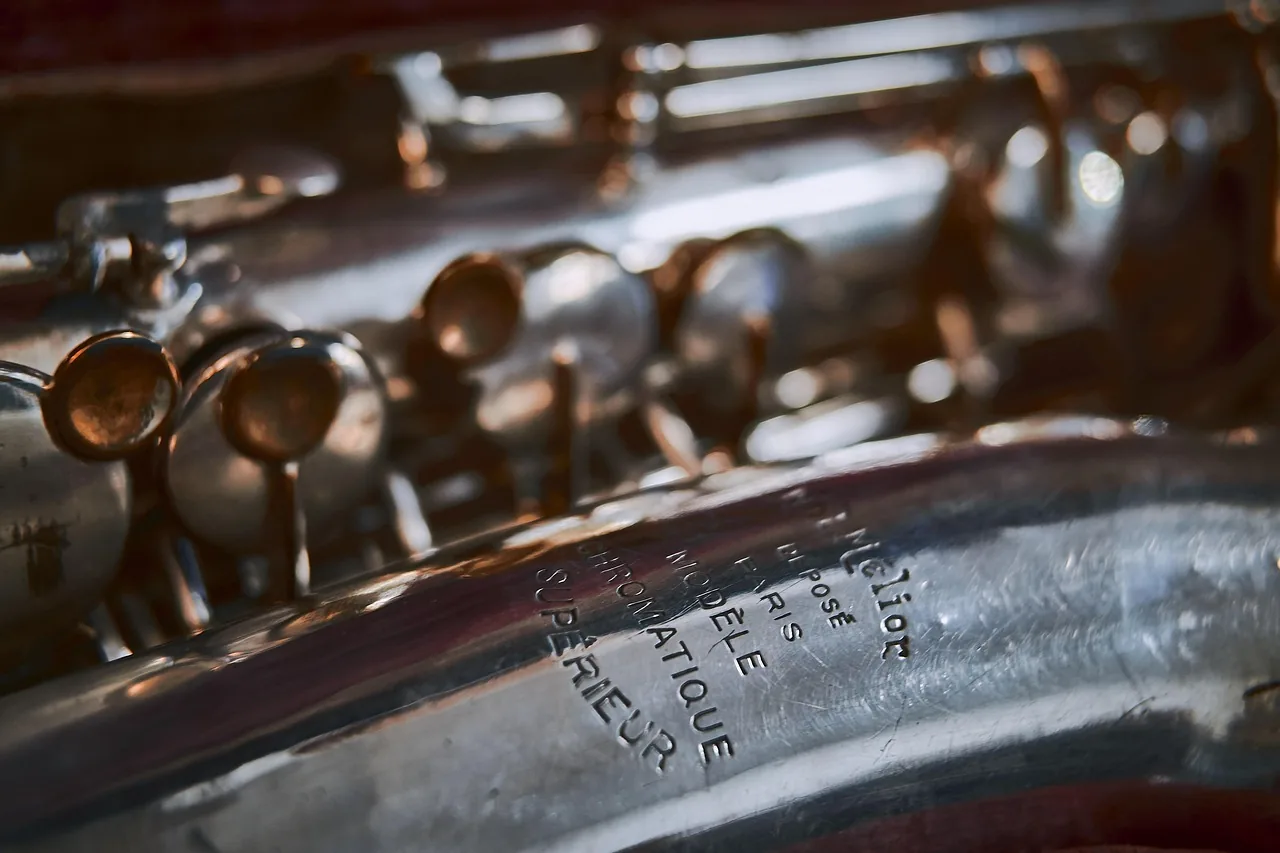
Reliable brands such as Yamaha, Selmer, Jupiter, SML Paris and Nuvo offer ranges suited to students. They provide access to parts, ongoing support and consistent manufacturing.
Introductory models and student altos
The ABS Nuvo jSax is intended for children and adults who want to try playing. Its light weight and recorder-like design make those first attempts at producing a sound less daunting.
Among student altos, the Jupiter JAS500Q is often mentioned. It combines comfortable ergonomics, tempered-steel springs and a complete package (mouthpiece, case and ligature) at a reasonable price.
| Use | Suggested model | Strength | Note |
|---|---|---|---|
| Introduction and children | Nuvo jSax | Lightweight, sturdy and simple | Supplied with strength 1.5 and 2 reeds |
| Study and beginners | Jupiter JAS500Q | Ergonomics and reliable keywork | Good value for money |
| Further progress and advanced playing | Yamaha YAS-62 and Selmer Axos | Better intonation and finish | Worth considering if you play regularly |
If you are choosing between brands, prioritize an instrument adjusted in a workshop over the brand name alone. A good adjustment matters more than a few years’ difference between model ranges.
To round out your equipment, consider useful accessories that protect your investment and improve your playing.
Mouthpiece, reeds and ligature: the trio that can transform a beginner’s setup
A simple adjustment to the mouthpiece and reed can often turn a difficult instrument into an enjoyable one.
Choosing a mouthpiece: favor a small tip opening. It makes sound production easier, stabilizes intonation and produces a gentle, rounded tone. Wider openings offer more tone color but require more air and control.
Mouthpiece materials
Hard rubber is a strong choice for beginners: it is comfortable, responds consistently and works well with softer reeds.
Metal can add projection and tonal variety but requires more control. Crystal is fragile and rarely suitable for beginners.
Reeds and strengths
As a guide, reed strengths range from 1 to 4; start between 1 and 2.5. Softer reeds require less effort and reduce fatigue.
Replace them regularly: a worn reed affects intonation and tone. Break in several reeds before judging an instrument.
Ligature and vibration
The ligature holds the reed in place: fabric, leather, metal and wood can affect how freely it vibrates.
For example, BG fabric ligatures can produce a warm sound, while leather tends to focus the tone.
“Before changing instruments, try several mouthpieces, reeds and ligatures: that is often the most cost-effective solution.”
| Component | Advice | Expected effect |
|---|---|---|
| Small-tip-opening mouthpiece | Hard rubber with a narrow opening | Easier sound production and a rounded tone |
| Reeds | Strength 1 to 2.5 for beginners | Less effort and better endurance |
| Ligature | Fabric or leather, according to preference | Warmth or controlled projection |
For more on teaching approaches and recommended adjustments, consult this practical resource: teaching guide to choosing an instrument.
Essential accessories to get started and protect your instrument
A few simple accessories can help prevent problems and support regular practice.

Case, gig bag and transport
Choose a rigid case: its structure, internal padding and secure fasteners protect the instrument from knocks.
A lightweight gig bag makes travel easier, but check how well it protects the bell and neck.
Strap and neck comfort
Prioritize comfort: a padded strap protects your neck and improves posture.
Proper adjustment distributes the weight across your body and prevents hand and neck strain.
Tuner, metronome and other tools
Working on intonation and rhythm helps you learn.
Useful examples include the Cherub WMT-565 (tuner and metronome) and Korg KDM-3 (dedicated metronome).
Daily care
Clean the instrument after every session to remove condensation.
A cleaning swab, cork grease (La Tromba), and BG or Herco kits help extend its life.
Stand and music stand
A secure instrument stand (such as the Hercules DS530B) and a stable music stand (Manhasset or K&M) make frequent practice easier.
The instrument remains accessible and ready to play, encouraging consistency.
“A well-maintained instrument retains its playing quality and value.”
| Accessory | Purpose | Budget priority |
|---|---|---|
| Rigid case (Gator) | Impact protection and secure support for the bell | Medium |
| Padded strap | Neck comfort and posture | High |
| Tuner and metronome (Cherub, Korg) | Intonation and rhythm | High |
| Cleaning swab and cork grease (La Tromba) | Daily care | High |
| Instrument stand and music stand (Hercules, Manhasset) | Safety and regular practice | Medium |
Conclusion
,
Conclusion: the best choice combines comfort, an immediate response and a suitable mouthpiece-and-reed setup.
For most beginners, a well-adjusted E-flat student alto supplied with a comfortable strap and soft reeds offers the best value for money. Try it in a shop with a tuner and request servicing if needed.
Do not sacrifice easy sound production, reliable keywork, comfortable hand and body positions, consistent intonation or the protection offered by the case. Avoid buying on the basis of lacquer or choosing a model without trying it; check the pads and look for leaks on a used instrument.
Next step: shortlist two or three instruments, try them while standing with a strap, and compare them using soft reeds. Start with a student instrument, refine your mouthpiece and reed setup, then consider upgrading as your skills and years of playing develop.
A well-chosen instrument makes playing the saxophone feel smoother and frees up energy to work on breathing, posture and musicality.